Which Fluke Multimeter Should You Buy? 289 True RMS vs 87V vs 88V vs a 600V Compact
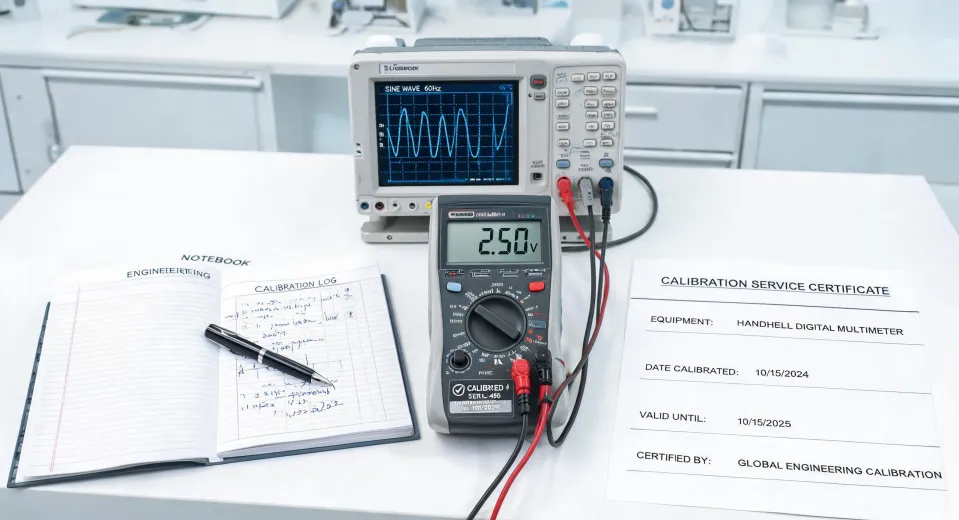
I review test equipment before it goes into service at an industrial electronics company. That means I inspect roughly 400 instruments a year. In 2024, I rejected 11% of first deliveries because of calibration documentation, fuse issues, or missing accessories. So when someone asks me “which Fluke multimeter should I buy,” I don't start with the display. I start with the parts you only think about after the meter saves your skin.
The comparison framework: what actually matters
If you search “which Fluke multimeter to buy,” you'll see the usual advice: 87V for electrical, 88V for automotive, 289 for logging, and a 600V compact meter for everyday work. That's not wrong, but it skips the hard part. The hard part is deciding what your job demands—and what you're willing to pay over the life of the tool.
I compare multimeters on four dimensions:
- Input protection and fuse replacement
- Accuracy and true RMS behavior
- Feature fit for your actual work
- Total cost of ownership, not the tag price
Dimension 1: Input protection and fuse replacement
The first dimension is the most underrated. A multimeter's input protection depends on its category and its fuses. Per IEC 61010-1, a CAT III 600V rating means the meter is designed to handle transient impulses on 600V distribution circuits. That's more than just “it reads up to 600V.” A CAT II rating at the same voltage is not the same thing.
Here's where fuse replacement comes in. A genuine Fluke fuse with a high energy rating isn't a $2 part in a bin. Depending on model, a replacement fuse can run $12 to $30—plus shipping, plus downtime while you wait. If you buy a meter without a clear fuse replacement path, you're not saving money. You're rolling the dice on your own protection.
Most people don't realize how often this matters. You don't blow a fuse during normal voltage measurements. You blow it when you're checking current on a live circuit. That's exactly the moment you want a fuse that opens fast and cleanly. A slow or wrong fuse can turn a small mistake into an arc flash.
I knew I should check fuse continuity on every incoming meter, but one week I skipped it because we were behind. That was the one time a technician grabbed a meter with a blown current fuse. The replacement fuse was $14, but the trust hit was worse. Now every meter in our program gets a fuse check before it reaches the floor.
Do not assume a third-party fuse with the same physical size is acceptable in a meter rated CAT III 1000V. The fuse must interrupt the available fault current. Check the manual for the exact Fluke fuse part number. If you search “Fluke multimeter fuse replacement,” use the part number from the manual, not a generic substitute.
Dimension 2: Accuracy and true RMS
Next is accuracy. If you work on variable frequency drives or other non-sinusoidal loads, you need a true RMS meter. The Fluke 289 True RMS multimeter is the extreme end of this: high resolution, logging, and a basic DC accuracy around 0.025%—though I'd check the current spec sheet on that decimal. The Fluke 87V is also true RMS with 0.05% basic DC accuracy, and it's simpler in daily use. For most field work, the difference between 0.05% and 0.025% rarely changes the answer. But the 289's logging capability can change the way you diagnose intermittent problems.
Here's the counterintuitive part: the 88V is not the best “multimeter” on paper. Its accuracy and true RMS behavior are good, but that's not why you buy it. You buy the Fluke 88V automotive multimeter because it's the right tool for vehicles. It measures dwell, duty cycle, and RPM, and it includes a temperature input. A general-purpose meter can't cover that without add-ons. So don't buy the 88V because it's “more accurate”—buy it because it fits automotive troubleshooting.
Dimension 3: Feature fit — 289 vs 87V vs 88V vs 600V compact
Fluke 87V vs 289. The 87V is easier to carry and simpler to use. The 289 has a bigger screen, more resolution, and logging you can set up and leave alone. If you check motors, PLCs, and panels, the 87V is usually enough. If you're chasing intermittent faults and need a record of what happened overnight, the 289 is worth the extra money.
88V vs 87V. The 87V is built for electrical and electronic work. The 88V adds automotive-specific functions. If you're a mechanic or automotive electrician, the 88V saves time. If you don't work on vehicles, those specialties are wasted. I'd rather have the 87V plus a good clamp meter for routine electrical work.
600V compact series vs the big three. Whenever someone types “Fluke 600V multimeter,” I think of the 117, 115, or 116: CAT III 600V meters that are smaller, lighter, and less costly. They're true RMS, and some include non-contact voltage detection. For facilities work, checking outlets, breakers, and basic voltages, that compact meter is the smart buy. It's not less safe if you respect its category. It just doesn't have the heavy-duty overload protection and industrial ruggedness of an 87V or 289.
Dimension 4: Total cost of ownership
Now let's talk money, because that's where people overpay or underbuy.
Purchase price is the most visible number, but it's not the whole cost. Here's a rough framework we use with our buyers:
- Price of the meter. The 289 is roughly 60-80% more expensive than the 87V, depending on current listings.
- Fuses and accessories. Add $20-40 over the first few years if you're hard on current measurements. Leads wear out too, and they're part of the system.
- Calibration. Every precision meter needs periodic calibration. If you're in ISO-regulated work, that's an annual cost. A meter that isn't calibrated is a liability, no matter how good it was new.
- Downtime. A meter that gives unreliable readings costs more in rework than its purchase price. I've seen a bad reading cost $22,000 in a redo. That is not an exaggeration.
I should add that I've also seen the opposite mistake: buying a 289 when a 600V compact meter was enough. The logging features were never used. The extra resolution never mattered. If you don't need logging, the 289's premium is wasted. Use your use case to define the tool, not the spec sheet.
So glad I specified the 87V over the 289 for our general field techs. Almost went with the 289's logging “just in case.” It would have paid for a feature almost nobody used.
Which Fluke multimeter should you buy?
Here's the no-weasel version:
- Buy the Fluke 117 or another compact CAT III 600V meter if you do light electrical, facilities, or HVAC basics, or need a go-to meter that won't break the budget.
- Buy the Fluke 87V if you do industrial electrical work, work on motor circuits, or need a heavy-duty meter that can take a drop and stay accurate. It's the best all-rounder for most professionals.
- Buy the Fluke 289 True RMS multimeter if you troubleshoot intermittents, need long-term logging, or want the highest resolution for complex diagnostics.
- Buy the Fluke 88V automotive multimeter if you work on vehicles. Its extra functions are worth the money in that context.
In my line of work, I've seen people save a few dollars on a less-protected meter and later spend ten times that on missed downtime and calibration issues. I've also seen people overbuy because the flagship spec looked cool. The right Fluke multimeter is the one that matches your real work, has proper fuses, and can be calibrated without huge surprises.

Marcus Feld
Marcus Feld is an electrical test and measurement analyst specializing in multimeters, oscilloscopes, clamp meters, insulation testers, spectrum analyzers, and data loggers. He applies IEC 61010-2-030 and IEC 61010-031 concepts while examining measurement category, bandwidth, true-RMS response, input loading, and stated uncertainty. His work helps maintenance engineers and test teams choose safe instruments with performance suited to the signals and environments they actually measure.