Why I Buy Fluke for Shared Tool Cribs—But Not for Everything
-
My opinion: buy for calibration and uptime, not for spec sheets
-
Argument 1: Calibration turnaround is the hidden line item
-
Argument 2: Training beats brand for thermal imaging
-
Argument 3: Do not force one vendor into every metrology job
-
Counterargument: but standardization saves money
-
What I do now
-
Bottom line
My opinion: buy for calibration and uptime, not for spec sheets
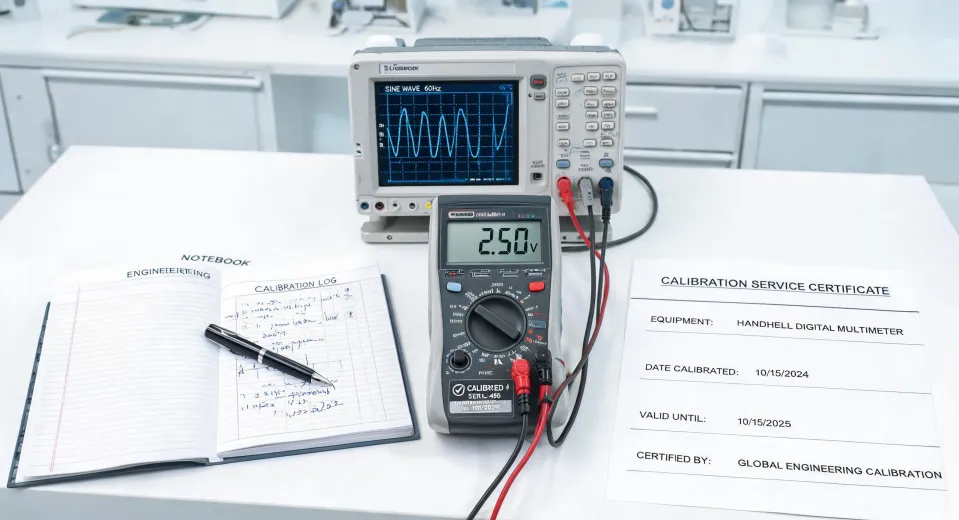
If you manage a shared tool crib, the best test equipment is not the lowest-priced meter that meets spec. It is the instrument your techs can trust, document, and get recalibrated without a six-week outage.
I am the office administrator for a 240-person company. I manage all tool and test equipment ordering—roughly $180,000 annually across 12 vendors. I report to both operations and finance. When I took over purchasing in 2020, I treated test equipment like office supplies. That was a mistake.
Look, I am not saying brand never matters. I am saying the brand is a proxy for a system: calibration, documentation, accessories, training, and repair. If the system is weak, the logo on the meter is irrelevant.
Argument 1: Calibration turnaround is the hidden line item
Most buyers focus on per-unit pricing and completely miss calibration turnaround, accessory compatibility, and software licensing. Those three items can add 30-50% to the true cost of ownership.
According to NIST (nist.gov), measurement traceability is an unbroken chain of calibrations linking an instrument to national or international standards. ISO/IEC 17025 is the international standard for calibration and testing lab competence. IEC 61010-1 covers safety requirements for electrical measurement equipment. If your vendor or calibration lab cannot produce the right paperwork, your quality team will reject the data.
We still have a Fluke 23 Series II multimeter in the tool crib. If I remember correctly, it was purchased before I started. It is not fancy. But our calibration lab knows it, the fuses are available, and the technicians trust the reading. We also standardize on a Fluke clamp multimeter for electricians who need current measurements without breaking the circuit. For the electronics bench, we keep a 287 true-rms electronics logging multimeter because it can log and trend data, not just show a number.
We have about 40 Fluke meters—maybe 45, I would have to check the asset list. When we consolidated vendors in 2024, we cut from 18 to 11. The savings came from fewer invoices and faster calibration routing, not from buying the lowest bid. One low-bid meter cost us more in calibration delays than it saved on purchase price.
Argument 2: Training beats brand for thermal imaging
When we added thermal cameras, I thought the purchase decision was the hard part. It was not. The hard part was how to use a Flir thermal camera correctly. Emissivity, reflected temperature, focus, and spot size matter more than the logo. A $5,000 camera in untrained hands produces colorful pictures and bad conclusions.
Same issue with clamp meters. I assumed any clamp meter could capture motor inrush. Did not verify. Turned out some Fluke clamp multimeter models have specific inrush modes and low-pass filters, while lower-cost units may not. That is not a product flaw. It is a spec question. The question everyone asks is which Fluke model is best. The question they should ask is what measurement are you making, and who will train the user.
So we now pair every thermal camera with a short internal training session. We do not rely on the box. We teach the techs to check emissivity settings, avoid reflective surfaces, and document ambient conditions. That training reduced bad thermal reports more than any equipment upgrade.
Argument 3: Do not force one vendor into every metrology job
Here is the honest limitation. Fluke is excellent for electrical test. It is not a coordinate measuring machine. If you need dimensional inspection for machined parts, a CMM belongs with metrology vendors, software ecosystems, and temperature-controlled rooms. I have seen procurement try to standardize every instrument under one brand to simplify purchase orders. That is a mistake.
A coordinate measuring machine is a capital metrology system. It needs a different calibration chain, different software, and different operator skill. For that category, I would not buy Fluke. I would run a separate request for quote with the metrology engineers and quality team.
People think expensive instruments create better technicians. Actually, better technicians and calibration systems create reliable measurements. The instrument is one input. The process is the output.
Counterargument: but standardization saves money
I get it. Finance likes one vendor, one purchase order, one invoice. Standardization does reduce administrative work. But the causation runs the other way. Vendors who support calibration and documentation can charge more because they reduce downtime. The premium is not causing reliability. Trust in the calibration ecosystem allows the premium.
Also, if you are a small shop doing occasional continuity checks, you may not need a 287 true-rms electronics logging multimeter. A basic meter may be enough. If you are a one-person shop with low-voltage diagnostics, a Fluke clamp multimeter might be overkill. I recommend Fluke for shared industrial tool cribs where uptime, traceability, and calibration matter. If that is not your situation, you might be overbuying.
Price check: a 287 true-rms electronics logging multimeter typically lists around $700-$900 depending on kit and distributor (based on January 2025 distributor quotes; verify current pricing). That is real money. Do not spend it unless the logging and accuracy solve a real problem.
What I do now
My checklist has five items: calibration certificate, turnaround time, software and accessory availability, training plan, and total cost of ownership. In that order. The purchase price comes last.
We keep the Fluke 23 Series II multimeter as a backup. We standardize Fluke clamp multimeters for electricians. We keep the 287 true-rms electronics logging multimeter for the electronics bench. We train on how to use a Flir thermal camera before trusting any thermal finding. For a coordinate measuring machine, we go to a metrology specialist, not a handheld test equipment vendor.
Bottom line
No instrument is best for every job. Fluke is my default for electrical test because the calibration and field durability reduce downtime. But if your need is dimensional metrology, buy a coordinate measuring machine from a metrology partner. If your need is occasional basic electrical checks, do not overbuy. Honest scoping beats brand loyalty. Calibration. Documentation. Uptime. That is it.

Marcus Feld
Marcus Feld is an electrical test and measurement analyst specializing in multimeters, oscilloscopes, clamp meters, insulation testers, spectrum analyzers, and data loggers. He applies IEC 61010-2-030 and IEC 61010-031 concepts while examining measurement category, bandwidth, true-RMS response, input loading, and stated uncertainty. His work helps maintenance engineers and test teams choose safe instruments with performance suited to the signals and environments they actually measure.