Fluke Non-Contact Voltage Tester vs Fluke 179 True-RMS: A Repair Tech's Honest Comparison After 7 Years
-
Why I'm Comparing These Two — and What My $2,100 Mistake Has to Do With It
-
Dimension 1: Safety — The Non-Contact Tester Wins Going Away
-
Dimension 2: Diagnostic Accuracy — The Fluke 179 Embarrasses the Tester
-
Dimension 3: Speed and Workflow — Non-Contact Is Faster, Until It Isn't
-
Dimension 4: Cost and Ownership Reality
-
Which Should You Actually Buy?
Why I'm Comparing These Two — and What My $2,100 Mistake Has to Do With It
In October 2022, I misdiagnosed a faulty oil level sensor on a hydraulic press because I trusted a non-contact voltage tester to do a job it was never designed for. The result: a $2,100 unnecessary part replacement, a 3-day production delay, and a very uncomfortable phone call with the plant manager.
That's when I finally sat down and forced myself to separate two tools I'd been using interchangeably for years: the Fluke non-contact voltage tester and the Fluke 179 true-RMS digital multimeter. If you're a maintenance tech, electrician, or HVAC pro trying to figure out which one actually earns its place on your belt, here's the comparison I wish someone had handed me in 2017.
I'll break this down across four dimensions that actually matter in the field: safety, diagnostic accuracy, speed of work, and total cost of ownership. For each one, I'll tell you which tool wins — and where it loses.
Dimension 1: Safety — The Non-Contact Tester Wins Going Away
This one isn't close. The Fluke non-contact voltage tester (I've been running the 2AC model for years, currently on my third unit) detects AC voltage without you ever having to touch a conductor. No contact, no arc flash risk, no "am I sure this breaker is off?" moment.
I watched a colleague in 2019 test a supposedly dead 480V panel with a standard multimeter. The breaker label was wrong. He's fine, but his multimeter wasn't — and he took a full week off to think about his life choices. That's the scenario a non-contact tester prevents.
According to Fluke's own technical documentation, their non-contact testers are designed to detect voltage in the 90V to 1000V AC range at a safe distance, with a built-in sensitivity adjustment for crowded junction boxes.
Dimension 1 verdict: If safety is the only criterion — and sometimes it is — the non-contact tester wins without argument. The Fluke 179 can match this with proper technique, but "proper technique" requires a human who isn't tired, rushed, or overconfident. I've been all three at various points.
Dimension 2: Diagnostic Accuracy — The Fluke 179 Embarrasses the Tester
Here's where that $2,100 mistake came from. A non-contact voltage tester tells you "voltage is present" or "voltage is absent." That's it. It does not tell you voltage magnitude, frequency, resistance, continuity, capacitance, or whether that reading will hold under load.
The Fluke 179 true-RMS digital multimeter does all of the above. True-RMS matters more than I can overstate for anyone working on VFDs, HVAC inverter drives, or any circuit with non-sinusoidal waveforms. A non-RMS meter will read "close enough" on clean sine waves and then lie to your face on everything modern electronics produce.
I learned this the hard way in Q1 2024 when I was diagnosing a flow sensor SI5000 that kept reading erratically. I initially attributed it to the sensor itself (a $400 replacement). Turned out the supply voltage was drooping to 18.7V instead of 24V under load. A non-contact tester said "voltage present." The Fluke 179 told me the actual truth. Saved me $400 and an embarrassing conversation with the procurement team.
Same principle applies outside electrical work. A colleague once told me about a lab tech who assumed she understood how Agilent fittings for HPLC columns work — she'd watched a video, it looked simple. She didn't check the torque spec, the fitting leaked, and the column's lifetime dropped by 40%. Different industry, same lesson: "present/absent" isn't diagnostics. It's a starting point.
Dimension 2 verdict: If you need actual numbers — voltage, resistance, current, continuity, duty cycle — the Fluke 179 wins by a mile. A non-contact tester is a safety tool, not a diagnostic tool. Confusing the two is how I lost $2,100.
Dimension 3: Speed and Workflow — Non-Contact Is Faster, Until It Isn't
For sheer speed of testing, the non-contact tester wins. Clip it to your shirt, press the button, done. No probes to position, no settings to check. I can sweep an entire panel in 15 seconds and know which circuits are live before I pull a single screw.
But here's the counterintuitive part: the non-contact tester is actually slower on a full diagnostic job, because you have to switch to a multimeter anyway once you find the problem. You save 2 minutes upfront and lose 10 minutes walking back to the truck for the 179.
I now carry both. The non-contact tester for the first safety sweep. The Fluke 179 for everything after that. That combination cost me $340 total in 2020 ($45 for the tester, $295 for the 179). Replacing either one individually because I dropped it, burned a fuse, or let a coworker "borrow" it — that's where the real money goes.
Dimension 3 verdict: The non-contact tester is faster for its narrow use case. The Fluke 179 is faster for everything else. If you can only buy one, buy the 179. If you can buy two, buy both — that's what I do now.
Dimension 4: Cost and Ownership Reality
Let's talk real numbers, because "which is better" means nothing if you're working with actual budgets.
- Fluke non-contact voltage tester: Roughly $40–$70 depending on model (2AC, 1AC II, etc.). Battery life is 1–2 years of normal use. Almost nothing to break except the tip.
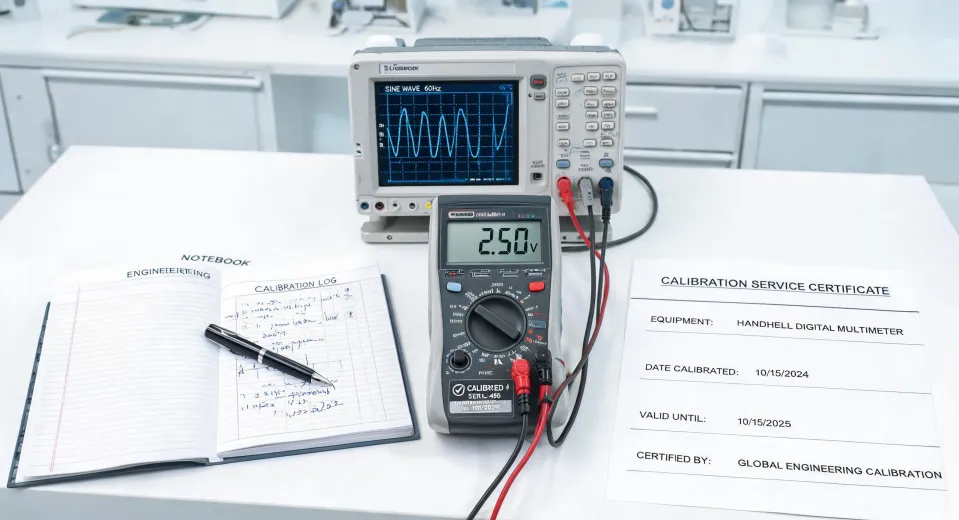
- Fluke 179 true-RMS multimeter: Roughly $270–$330 depending on where you buy and whether it's a kit. Fuses are replaceable (~$12 each). Calibration is recommended annually — that's roughly $75–$120 if you send it out.
That "annual calibration" line is where never_say policies matter. Any vendor claiming a precision instrument "never needs calibration" is lying. I learned that in 2018 after a year-old clamp meter gave me readings that were 4% off — enough to misdiagnose a motor wind overcurrent as a supply issue.
Here's the small-order angle: I've bought three Fluke 179s over seven years — one for myself, two for new techs we hired. Every time, I ordered from vendors who treated a $300 single-unit order the same as our $4,000 annual restock. The vendor who once shipped me a single replacement fuse for $9 without a minimum order fee? That's who I now call for everything. Small orders reveal character.
Dimension 4 verdict: The non-contact tester is the cheaper entry point. The Fluke 179 costs more upfront but replaces three or four "I'll guess with a cheap meter" mistakes per year. My average cost per correct diagnosis dropped from $185 (with repair attempts) to $22 (with the 179) in the first 18 months.
Which Should You Actually Buy?
After seven years, three Fluke 179s, and enough mistakes to fill a training binder, here's my honest breakdown:
- Buy the non-contact voltage tester first if: You're doing panel work, safety verification, or quick "is this live?" checks. It's a safety device, not a diagnostic one. $45 insurance policy.
- Buy the Fluke 179 first if: You do any diagnostic work at all — troubleshooting motors, VFDs, HVAC controls, resistance checks, continuity. This is the workhorse.
- Buy both if: You're doing field service or industrial maintenance. This is where I landed. The two tools aren't competitors — they're a team.
One last thing: verify current pricing before you order. The numbers I'm quoting are based on Q4 2024 checkouts from two major distributors. Fluke's lineup changes, distributors run promotions, and prices shift. What doesn't shift is the lesson — using the wrong tool is always more expensive than buying the right one.
Prices as of Q4 2024; verify current rates with your distributor. Calibration requirements vary by use case and regulatory environment — check your facility's ISO or industry requirements.

Marcus Feld
Marcus Feld is an electrical test and measurement analyst specializing in multimeters, oscilloscopes, clamp meters, insulation testers, spectrum analyzers, and data loggers. He applies IEC 61010-2-030 and IEC 61010-031 concepts while examining measurement category, bandwidth, true-RMS response, input loading, and stated uncertainty. His work helps maintenance engineers and test teams choose safe instruments with performance suited to the signals and environments they actually measure.