The Real Reason Your Test Equipment Orders Keep Going Wrong
The request looks simple until it isn't
Office administrator for a 240-person company. I manage all facilities and maintenance tooling orders—roughly $210,000 annually across 14 vendors. I report to operations and finance. When I took over purchasing in 2020, I thought buying test equipment was mostly a price and brand game. Someone sends a request, I find the model, I compare three quotes, I order. Done.
Then the requests got more specific. Can you order a Fluke 110 multimeter? Which Fluke 116 HVAC multimeter reviews should we trust? We need a moisture meter for the concrete slab. Should we buy a Topdon vs Flir thermal camera? And someone in HR asked for a thermometer fever temperature check for the office first-aid room.
I used to think those were all just tools. They're not. That was my first mistake.
The deeper problem: you're not buying tools, you're buying measurement tasks
It's tempting to think a multimeter is a multimeter. But a Fluke 110 and a Fluke 116 HVAC multimeter are built for different jobs. The 110 is a solid basic true-RMS meter for electrical troubleshooting. The 116 adds temperature, microamps, and capacitance—features that matter when you're diagnosing a furnace flame sensor or an HVAC control board. If I buy the 110 because it's cheaper and the HVAC tech needed the 116, I haven't saved money. I've bought the wrong tool and delayed the job.
The same thing happens with moisture meters. A pin-type wood moisture meter and a pinless concrete moisture meter are not interchangeable. For a concrete slab, you may need ASTM F2170 in-situ testing, not a general-purpose probe from a hardware store. I'm not 100% sure every contractor agrees on the method, but the standard exists for a reason: wrong moisture readings lead to failed flooring, mold, and expensive callbacks.
Thermal cameras are another trap. When you're comparing Topdon vs Flir thermal cameras, the spec sheet matters more than the logo. Check IR resolution, thermal sensitivity (NETD), temperature range, accuracy, and whether calibration is NIST-traceable. A camera with high resolution but poor NETD can miss a small electrical hotspot. A lower-cost camera might be fine for finding a drafty window, but not for inspecting a 480V panel. Fluke thermal cameras are also in this space for electrical and industrial work, but the task should drive the spec—not the other way around.
And then there's the thermometer fever temperature request. This is where I learned the hardest boundary lesson. An industrial infrared thermometer is not a clinical thermometer. For fever screening, you need an FDA-cleared clinical device with accuracy around ±0.2°C in the human body temperature range. Using a general-purpose IR gun because it's already in the tool crib is how you get unreliable readings and worried employees.
The vendor who said 'this isn't our strength—here's who does it better' earned my trust for everything else.
That quote stuck with me. A good supplier knows their limits. A good buyer should too.
The 'one good brand' myth has a cost
This was true 15 years ago when one good clamp meter covered most jobs. Today, HVAC, electrical, and building diagnostics require different specs and safety ratings. The 'buy one good brand and you're set' advice ignores that a Fluke 110, a Fluke 116, a moisture meter, a thermal camera, and a clinical thermometer are solving completely different problems.
I didn't fully understand that until a $60 mistake turned into a scheduling problem. The failure in July 2023 changed how I think about buying test tools by brand name alone. We had an HVAC inspection coming up. A tech requested a Fluke 116 HVAC multimeter. I ordered a Fluke 110 instead because the reviews were good and it was $60 cheaper (which, honestly, felt like a responsible choice at the time). The tech couldn't measure microamps on the flame sensor. He borrowed a meter from another site, but the delay pushed the inspection. We didn't fail, but we came close. That $60 saving cost us roughly six hours of coordination and a very unhappy operations manager.
What it costs when you ignore the difference
The bigger cost is usually hidden. A wrong moisture meter can lead to a failed floor. A thermal camera with poor thermal sensitivity can miss a loose connection before it becomes a fire risk. A non-clinical thermometer can give false confidence during a fever check. And a multimeter without the right CAT safety rating can put a technician in danger. That's not a procurement problem. That's a safety problem.
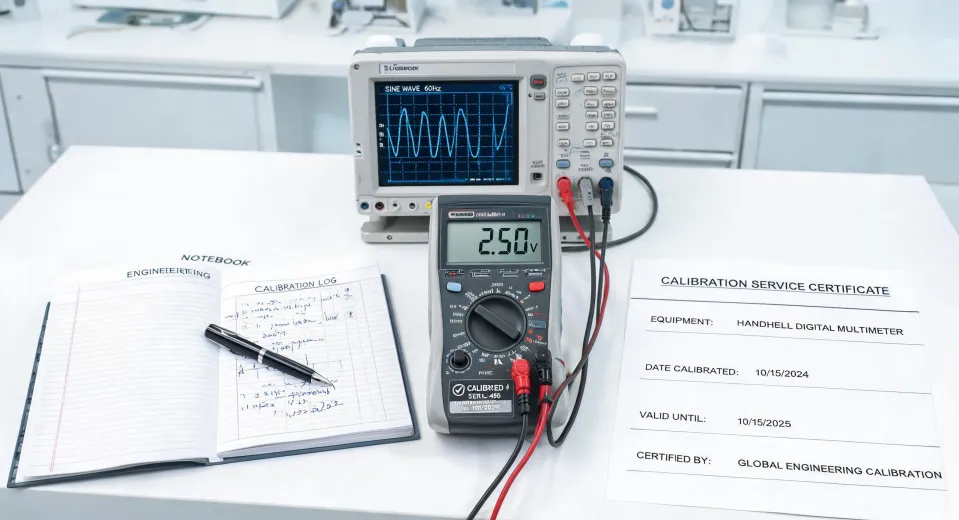
I also learned that calibration is not optional. After a vendor sent us a pressure calibrator with no NIST-traceable certificate, finance rejected the expense report. We ate $3,100 out of the department budget and lost two weeks waiting for replacement paperwork. Now I verify calibration capability before placing any order. For electrical test equipment, I ask for IEC 61010-1 CAT III or CAT IV ratings depending on the panel. For thermal cameras, I ask for calibration certificates. For clinical thermometers, I ask for FDA clearance.
There's something satisfying about finally getting our tool crib standardized. After years of mismatched meters and missing certificates, we now have a simple rule: every tool has a task, and every task has a spec.
The fix is simpler than the problem
I stopped buying tools by brand or price alone. Now I start with three questions:
- What is the measurement task? Basic electrical troubleshooting? HVAC diagnostics? Concrete moisture? Body temperature?
- What does the standard require? CAT rating, NIST-traceable calibration, FDA clearance, ASTM method.
- Who is the specialist? Fluke for electrical test and measurement. A purpose-built moisture meter for moisture. A clinical thermometer for fever. A thermal camera that matches the inspection job.
For basic electrical work, the Fluke 110 is a good fit. For HVAC, read the Fluke 116 HVAC multimeter reviews and confirm it covers temperature and microamps. For moisture, buy a moisture meter designed for the material—not a multimeter accessory. For thermal, compare Topdon vs Flir thermal cameras on NETD and IR resolution, and consider Fluke if the job is electrical inspection. For fever temperature, buy a clinical thermometer and keep it out of the industrial tool crib.
To be fair, this takes more upfront work. You have to talk to the techs, read the standards, and ask vendors uncomfortable questions. But it's cheaper than buying the wrong tool twice. And if a vendor tells you they're not the right fit for a task, don't hold it against them. That's not weakness. That's expertise with boundaries.

Marcus Feld
Marcus Feld is an electrical test and measurement analyst specializing in multimeters, oscilloscopes, clamp meters, insulation testers, spectrum analyzers, and data loggers. He applies IEC 61010-2-030 and IEC 61010-031 concepts while examining measurement category, bandwidth, true-RMS response, input loading, and stated uncertainty. His work helps maintenance engineers and test teams choose safe instruments with performance suited to the signals and environments they actually measure.