Which Fluke Multimeter Do I Need? An Electrician's Honest Answer (Plus What Isn't Fluke)
-
Why trust my answer more than the guy next to you on the jobsite?
-
Which Fluke multimeter do I need? Start with your daily work
-
Wait — do you actually need a clamp meter instead?
-
Searching for a “Fluke 12 multimeter manual” or a “Fluke 30 clamp meter”?
-
When the answer isn't a Fluke multimeter at all
-
What most buyers forget: calibration and CAT ratings
-
One last piece of honesty
If you're typing “which Fluke multimeter do I need?” into Google, here's the short answer:
- HVAC work → Fluke 116
- Industrial maintenance / motor troubleshooting → Fluke 87V
- Residential and commercial electrical → Fluke 117
- Electronics, PLCs and control boards → Fluke 115
- Current measurements on a live, unbroken wire → Fluke 323 or 325 clamp meter
That list has answered roughly 90% of the “which Fluke” questions I've been asked since I started doing industrial electrical work in 2017. But before you open your wallet, let me save you the $1,200 in wasted tool-buying mistakes that taught me this: sometimes the right answer is not a Fluke multimeter at all. If your search included a VHX digital microscope or a zero speed sensor, keep reading — because you're about to buy the wrong tool.
Why trust my answer more than the guy next to you on the jobsite?
I'm not a salesperson. I'm an industrial electrician who has spent the last eight years maintaining production equipment in a food-processing plant, and I train the apprentices who come through our shop. I also keep a running log of my own equipment-buying mistakes — fourteen significant ones so far, totaling roughly $1,200 in wasted budget, not counting the hours I lost chasing readings that didn't make sense.
It took me six years and dozens of tool decisions to understand the core insight: the best Fluke multimeter for you depends on what you measure on an ordinary Tuesday, not on what the most experienced guy in your plant carries. That's why I don't automatically recommend the flagship model to everyone who asks.
Which Fluke multimeter do I need? Start with your daily work
HVAC service: Fluke 116. If you spend your day on gas furnaces, rooftop units, or commercial refrigeration, the 116 is the one. It has a microamp range for checking flame sensor current — most general-purpose meters don't — and it accepts a K-type temperature probe, so you can check supply and return temperatures without carrying a separate thermometer. I wouldn't walk into a furnace room with anything less.
Residential / commercial electrical: Fluke 117. The 117 is the electrician's meter. It has non-contact voltage detection, which lets you confirm a conductor is live before you touch it, and a low-impedance (LoZ) mode that solves the “ghost voltage” problem: a dead wire lying next to live cables can induce voltage, and a normal high-impedance meter will show something like 50 volts that doesn't actually exist. The LoZ mode loads the circuit enough to make that phantom reading disappear. If you've ever chased a “live” circuit that turned out to be induction, this feature pays for the meter by itself.
Electronics / controls: Fluke 115. If your work is mostly 24-volt control panels, PLC I/O, and circuit boards, you don't need the full industrial feature set. The 115 is true-RMS, measures capacitance, and has a fast continuity beeper. It's the meter I hand to someone who's diagnosing a sensor signal or checking a board for shorts.
Industrial maintenance: Fluke 87V. This is the gold standard for plant work, and the one I wear on my belt most days. The 87V handles 480 V motor control centers, measures frequency, reads 4-20 mA loops as a percentage, and — most importantly — has a low-pass filter that lets you get an accurate voltage reading on variable-frequency drive output. A cheaper meter will show garbage when it hits the PWM waveform from a VFD; the 87V cuts through it. It's rated CAT III 1000V / CAT IV 600V, which makes it suitable for almost every industrial measurement I run into.
If you only occasionally touch a motor starter, don't let the 87V's price scare you — the 117 or 115 will be fine. But for someone who lives in a plant, the 87V isn't overkill. It's the difference between a trustworthy reading and a misleading one.
Wait — do you actually need a clamp meter instead?
People ask “which Fluke multimeter do I need” before asking the more important question: do you need a multimeter or a clamp meter? They're different tools.
A digital multimeter measures current by becoming part of the circuit — you shut down power, open the wire, and connect the leads in series. A clamp meter measures current by closing its jaws around an insulated wire, using the magnetic field, and never breaking the circuit. If the job is checking motor amperage, compressor draw, or load balance on live feeders, a clamp meter is the right tool.
Fluke 323 is the entry point: true-RMS, 400 A AC, no unnecessary features. For HVAC and light commercial work, it's enough. Fluke 325 adds DC current and temperature measurement, which is worth the upgrade if you also work on DC motors, battery systems, or heating equipment. And for industrial techs who deal with large feeders or crowded panels, the Fluke 376 FC with iFlex is my favorite: instead of a fixed jaw that has to fit around the cable, it uses a flexible current probe that wraps around fat conductors and awkward bundles.
Searching for a “Fluke 12 multimeter manual” or a “Fluke 30 clamp meter”?
Maybe you inherited an old meter and just want to figure out what it does. If you landed here while searching for a Fluke 12 multimeter manual or a Fluke 30 clamp meter, go straight to the official support page (fluke.com/support), type the model number, and download the PDF. Fluke still posts manuals for discontinued models, and you don't need to create an account or pay for a download.
The Fluke 12 was a compact auto-ranging multimeter from Fluke's 10 series, and the Fluke 30 was a basic AC clamp meter from the same era. Neither is sold as a new product today. They were good, honest tools in their time — but they're old now.
That's where the pitfall shows up. An old Fluke still says “Fluke” on the front, so people assume it's as accurate as the day it left the factory. It isn't, especially if it's been sitting in a truck drawer for years.
In 2019, I watched an apprentice pull a worn Fluke 30 clamp meter out of a drawer when we needed to check a conveyor motor fed by a VFD. I knew we should use a true-RMS meter with the right filtering for drive output, but it was supposed to be a quick check, so I let it go. The old clamp meter showed a number that looked normal, we put the conveyor back in production, and the motor overload tripped forty minutes later. When we measured with an 87V and a current logger, the actual current was about 25% higher than the Fluke 30 had shown. That one shortcut cost us half a production shift.
So here's my rule: old Fluke meters make great backups, but don't trust one for critical diagnostics until it's been checked. Replace the battery, inspect the leads, and verify the reading against a known source — or send it for calibration. And if someone on eBay is asking a premium for a “vintage” Fluke 12 or Fluke 30, let it go. The manual is free, and the new versions are safer, more accurate, and easier to read.
When the answer isn't a Fluke multimeter at all
Now let's get to the category confusion I see most often.
If you're searching for a VHX digital microscope: Fluke doesn't make one. A digital microscope is an optical inspection tool for things like cracked solder joints, hairline fractures on machined parts, or printed circuit board defects. The VHX line is a well-known product family in that category, but it comes from a company whose core business is industrial microscopy — not electrical test tools. If that's what your job requires, you need a microscope manufacturer, not a multimeter maker.
This confusion is understandable. When you've trusted a brand for years, you start to assume it makes everything. In March 2024, a quality manager asked me to find the “Fluke version” of a VHX digital microscope they'd seen at a trade show. I spent an afternoon searching Fluke's catalog before it clicked: I was trying to force a test-and-measurement brand into an optical inspection problem. That's exactly the kind of mistake I warn apprentices about.
If you're searching for a zero speed sensor: again, that's not a Fluke product. A zero speed sensor is a rotation-monitoring switch mounted on a conveyor, mixer, or other rotating shaft, used to detect when motion drops below a set speed. You buy those from industrial sensor or automation suppliers. Fluke's role comes after installation: you use a multimeter to verify the sensor has power, that its output is switching, and that the signal actually reaches the PLC. The sensor does the job; a Fluke test tool proves it's doing it.
A brand that openly draws its own boundary — “we make electrical measurement tools, not microscopes or machine sensors” — earns more trust, not less. My rule after years in maintenance: don't buy a brand, buy the right tool. And if a supplier tells you “this isn't our specialty, but here's who does it better,” that's the supplier to keep for everything else.
What most buyers forget: calibration and CAT ratings
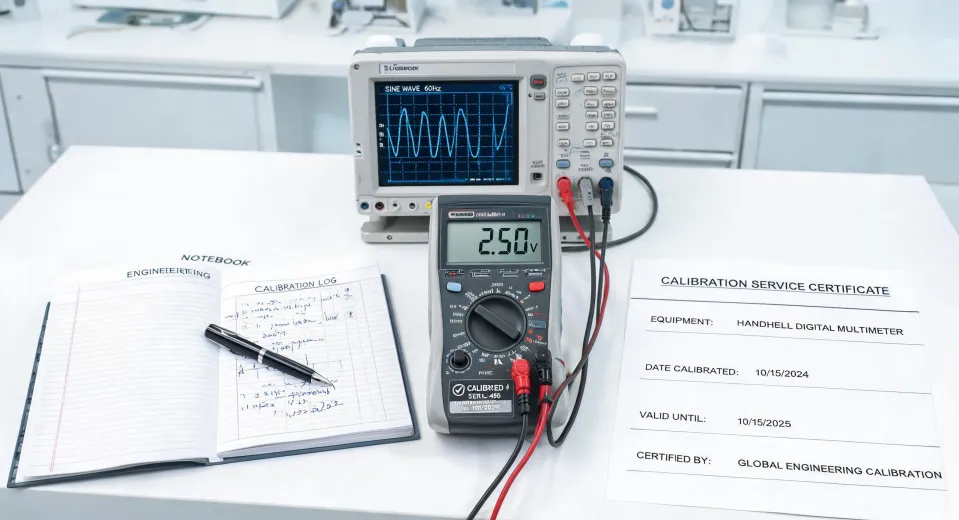
No meter — not even a new Fluke — should be treated as permanently accurate. All precision instruments drift as components age. The right calibration interval depends on how often you use the meter, how hard you are on it, and what your company's quality program requires. When in doubt, start with one year and let the calibration records guide you. If you're buying a used meter online, ask for its calibration date before you hand over money. A bargain meter with an expired calibration isn't a bargain if it gives you a false reading on a live 480 V motor circuit.
And while we're on safety, check the CAT rating before you decide. According to IEC 61010-1, measurement categories define where a meter is safe to use based on the transient overvoltage energy available at that point. A CAT III 600 V meter is designed for distribution panel work. A CAT IV rating is required if you're working at the utility service entrance, where fault energy is much higher. If a meter isn't rated for the location where you're measuring, don't use it there — regardless of the brand name on the front.
One last piece of honesty
Every recommendation I made above has an exception. Your employer may require a specific meter, a higher CAT rating, or intrinsically safe equipment for explosive atmospheres. Follow your site's rules before you follow my advice.
But the underlying lesson stays the same: choose the tool for the actual job, know the limits of the brand, and never assume a meter is accurate just because it has a familiar name on it. That's the part I had to learn the expensive way, and it's the part I try to pass on to every technician I train.

Marcus Feld
Marcus Feld is an electrical test and measurement analyst specializing in multimeters, oscilloscopes, clamp meters, insulation testers, spectrum analyzers, and data loggers. He applies IEC 61010-2-030 and IEC 61010-031 concepts while examining measurement category, bandwidth, true-RMS response, input loading, and stated uncertainty. His work helps maintenance engineers and test teams choose safe instruments with performance suited to the signals and environments they actually measure.