Fluke vs FLIR Multimeter: A Quality Inspector’s Perspective on Choosing the Right Test Tool
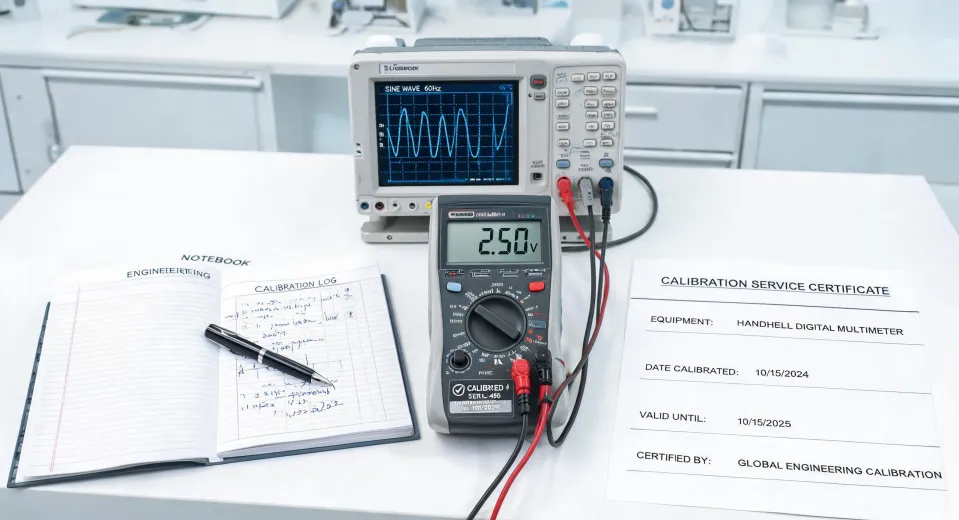
At the start of our first quarterly quality audit in 2024, one of our techs was ready to sign off on a batch of 2,400 units. The measurements looked fine on paper. But the meter he was using had failed calibration the week before, and nobody swapped it out. That moment reinforced something I've believed for years: the quality of your test instrument determines the quality of your final product. This is why I have such strong opinions about multimeter brands.
Why I'm Comparing Fluke and FLIR From a Quality Perspective
I've been reviewing incoming and outgoing equipment for over four years. In that time, I've rejected around 8% of first deliveries due to specification mismatches, and most of those issues traced back to inaccurate or incomplete testing. So when people ask whether they should buy a Fluke or a FLIR multimeter, I don't answer out of brand loyalty. I look at what a tool has to do before you can put your signature on a certificate of compliance: repeatable measurements, calibration stability, physical ruggedness, and whether the tool actually helps you catch defects early. That last part ties directly into the prevention-over-cure approach I follow in every audit.
Fluke and FLIR both produce solid electrical test gear. But they come at the problem from different directions. Fluke is a test-and-measurement company at its core. FLIR is known for thermal imaging, and their multimeters often carry that capability. That difference influences everything else.
I'm not a thermal imaging specialist, so I won't try to compare their IR resolution specs. What I can tell you is how each meter behaves when it's part of a quality workflow.
Accuracy and Calibration Stability
In my experience, Fluke meters hold calibration well. I want to say some of our instruments stayed within spec through three annual calibration cycles, but don't quote me on that—I'd have to pull the records. What I can confirm from the public spec sheet: the Fluke 87V lists basic DC accuracy of ±(0.05% + 1 count) (fluke.com). That's a level of confidence you can build a verification process around.
FLIR's multimeters, such as the CM174 clamp meter, have respectable published specs too. But the difference appears after first year. In our lab, Fluke units usually came back from calibration with tiny adjustments. Three out of six FLIR units we tested in 2023 needed minor calibration corrections. Nothing dramatic. Yet when you're tracking hundreds of measurements, small corrections add up to extra paperwork and revalidation.
One thing I should add: FLIR's screen sometimes looks cleaner, but that doesn't automatically mean more accurate. It just feels nicer. The decision has to rest on calibration data.
My conclusion: if accuracy over time is the priority, Fluke is the safer pick.
Durability: The Drop Test I Didn't Plan
Let me be honest. I once knocked a Fluke 116 off a six-foot ladder and watched it bounce off a concrete floor. It kept working. The casing had a scuff, but measurements stayed within spec. That was three years ago, and that meter is still in our lab. Not bad for a tool that was never supposed to be a drop test.
I tried a FLIR multimeter in the same kind of environment for about a month. It didn't fail. But the shell developed a small crack around the battery compartment after a couple of falls from bench height. That's not a functional failure yet. For me, though, a crack is an early warning. In a dusty or humid workshop, small openings compromise internals.
This may be slightly unfair to FLIR; it doesn't market itself as the drop-proof brand. But if your techs work from ladders, conveyor lines, or confined spaces, be honest about the hit probability. Fluke is designed for abuse.
Conclusion: Fluke wins this dimension.
Functionality: Where FLIR Surprised Me
I went into this comparison expecting to dismiss FLIR as a camera company dabbling in meters. That expectation didn't survive contact. The ability to view a thermal image on a multimeter screen is genuinely useful when you're troubleshooting electrical panels. A technician who tested a FLIR unit found a hot spot in a breaker panel in about two minutes. With a standard Fluke meter, we would have had to disconnect the load and test each branch manually. That kind of preventive capability has real value.
But that function comes with a learning curve. To set up a thermal capture, you have to scroll through menus. In a hurry, that's annoying. Fluke's interface is more direct, and its auto-ranging is genuinely smooth. An automatic multimeter reduces the silly mistakes that happen when someone has to manually switch ranges under stress.
For socket testing, I still reach for a small Fluke socket tester before I use any multimeter. It's a focused tool that checks wiring polarity and continuity in seconds. Far better than trying to measure mains with leads. It saves me five minutes per outlet check, and in a quality inspection, those minutes matter.
Also, I keep a digital vernier caliper on the bench for mechanical dimensions. Fluke doesn't make that caliper—I use a dedicated one. But when the task is electrical, the Flukes almost always get picked first.
Conclusion: FLIR's integrated thermal vision is a real advantage in preventive maintenance, but Fluke is still the more straightforward daily instrument for electrical testing.
Total Cost of Ownership and the Rest of the Toolkit
Fluke's up-front pricing is higher. I'm not going to pretend otherwise. But total cost is more than the ticket price. In our experience, Fluke meters rarely need repairs. Calibration turnaround is predictable. FLIR units cost less initially, but their calibration can take longer, and repairs may require a dedicated service visit. For a quality lab, downtime is expensive.
On the shelf in our inspection area, you'll find several Fluke clamp meters for non-invasive current checks, a Fluke socket tester for outlet verification, and a few auto-ranging multimeters. The digital vernier caliper sits next to them, because mechanical tolerances still matter in electrical assemblies. Each tool has a place.
I should mention that these observations are based on usage in our company, not on a formal industry study. As of early 2025, this is what I see in our workflows. Pricing and service networks change, so verify current specs before making a purchase.
My conclusion: over a five-year ownership period, the total cost of Fluke is often lower than expected, simply because you spend less time fighting the instrument.
Which One Should You Choose?
Here's my practical rule: if your team works in harsh industrial environments, needs dependable calibration behavior, and can't afford surprise downtime, choose Fluke. The higher purchase price buys predictability. That's the 'prevention over cure' mindset.
If your job involves scanning panels, looking for overloaded circuits, or checking thermal anomalies, a FLIR multimeter with infrared capability could be the smarter pick. The learning curve is real, but the ability to find a fault before it turns into a failure is exactly the kind of early intervention that saves money.
Whatever you choose, make sure your calibration provider can handle it. An out-of-calibration meter is a silent risk. I once rejected a shipment of 8,000 units because the measurement tool was off—not because the product was bad. That mistake taught me to verify the checker before checking the product.
Five minutes of verification beats five days of correction. That's why the right meter—and a proper calibration schedule—is worth every penny.

Marcus Feld
Marcus Feld is an electrical test and measurement analyst specializing in multimeters, oscilloscopes, clamp meters, insulation testers, spectrum analyzers, and data loggers. He applies IEC 61010-2-030 and IEC 61010-031 concepts while examining measurement category, bandwidth, true-RMS response, input loading, and stated uncertainty. His work helps maintenance engineers and test teams choose safe instruments with performance suited to the signals and environments they actually measure.