Fluke Multimeter FAQ: Buying Tips, Basic Use, and the Mistakes I Made Along the Way
-
Fluke Multimeter FAQ
-
1. Is a Fluke multimeter worth the premium?
-
2. What does 'Chinese Fluke multimeter' mean? Is it fake?
-
3. Where's the safest place to find a Fluke multimeter for sale?
-
4. How do I use a Fluke multimeter for basic measurements?
-
5. Why would I need a 0-12 micrometer set if I already have a Fluke multimeter?
-
6. Can a Fluke multimeter help with an SM flow meter?
-
7. How often does a Fluke multimeter need calibration?
-
1. Is a Fluke multimeter worth the premium?
Twelve years. Six significant buying mistakes. About $4,700 in wasted budget. That's why I keep a checklist. This Fluke multimeter FAQ is that checklist in article form.
The short version: buy from authorized sources, verify what you're buying, use the right jacks, calibrate on schedule, and understand that a multimeter won't measure everything. It won't measure shaft wear. It won't tell you if an SM flow meter is reading correctly. That's not a flaw. That's a boundary.
Fluke Multimeter FAQ
1. Is a Fluke multimeter worth the premium?
Yes, but not because of magic. It's because a genuine Fluke meter gives you predictable accuracy, clear safety ratings, and support when something goes wrong. A cheap meter can have an accuracy spec too. The difference is what happens after a drop or an overload.
In 2017, I was involved in a test-tool order where the buyer chose a cheaper alternative to save money. I didn't push back hard enough. The meters looked fine on the bench. But on a three-phase panel, one meter showed unstable readings on the same phase three times in a row. We stopped work, rechecked with a known-good meter, and found the cheaper meter was drifting. The verification process cost about a week of lead time and ate up any savings.
I only became a real believer after that. Before, I thought 'buy authorized' was procurement paranoia. It wasn't.
2. What does 'Chinese Fluke multimeter' mean? Is it fake?
This needs a careful answer. Genuine Fluke products are sold in China, and some Fluke models, such as the 15B+ and 17B+, are made and sold mainly in that market. Those can be completely genuine. So 'Chinese Fluke multimeter' is not automatically code for 'fake.'
But online, the phrase is also used to sell counterfeit units. In 2019, I ordered 12 multimeters from a marketplace listing that used official-looking product photos. The boxes looked right. The meters looked right. But when we compared them with a known-good Fluke on variable-frequency drive output, the readings wandered. We sent them back. A week of lead time gone. The supplier disappeared.
Here's my checklist now:
- Buy from an authorized distributor listed on Fluke's official site.
- Ask for the serial number and have Fluke support verify it.
- Treat a price 30-50% below normal street price as a red flag.
- Compare the model number with Fluke's official lineup. If the listing says 'Fluke' but no official model number, walk away.
A counterfeit meter isn't just a fake product. It's false confidence. That's worse than no reading. The real lesson: 'Chinese' isn't the problem. The unauthorized seller is.
3. Where's the safest place to find a Fluke multimeter for sale?
An authorized distributor. Period. Search 'Fluke multimeter for sale' and you'll get hundreds of results. Some are official stores. Some are gray-market resellers. Some are outright counterfeiters. The safest path is to use Fluke's distributor locator and start there.
As of January 2025, a new Fluke 87V runs roughly $450-$550 at authorized U.S. distributors, based on publicly listed prices. Verify current rates before quoting anything to a buyer. If you see a new 87V at $220, that's not a deal. That's the price of a counterfeit plus shipping.
In China, buy from Fluke's official online store or an authorized channel. You might pay a little more. Think of the difference as insurance against a wrong reading.
4. How do I use a Fluke multimeter for basic measurements?
The first mistake I see apprentices make isn't the dial. It's the jacks.
Black lead: always in COM. Red lead: in the VΩmA jack for voltage, resistance, and milliamps. For higher current, move the red lead to the A jack, and make sure the meter is connected in series with the circuit, not across it.
For AC voltage, turn the dial to V~. For DC voltage, turn it to V⎓. Touch the probes to the test points, read the display, remove the probes. That's it.
For continuity, select the beep symbol, turn off power, and touch the probes across a fuse, wire, or switch contact. If you hear a beep, the path is complete.
One warning: don't measure resistance on a live circuit. I've seen a meter survive this with just a blown fuse. The human hand doesn't always survive the same mistake.
5. Why would I need a 0-12 micrometer set if I already have a Fluke multimeter?
Because they measure different worlds. A multimeter measures voltage, current, and resistance. A 0-12 micrometer set measures physical dimensions like shaft diameter and wear. You need both in industrial maintenance.
Here's a real example. A pump motor kept tripping the overload. I chased the electrical side for two days—wiring, contactor, phase currents, winding resistance. All of it checked out. Finally, a mechanic measured the pump shaft with a 0-12 micrometer set and found it was worn beyond tolerance. The problem was mechanical all along.
The electrical symptoms made it look like an electrical issue. The multimeter did its job. But the answer was on the shaft, and no multimeter can measure that.
6. Can a Fluke multimeter help with an SM flow meter?
Partially, and I want to be honest about the boundary. I work with test instruments, not flow meter engineering. If you're selecting an SM flow meter or calculating flow rates, ask someone who does that daily. I won't pretend to be the expert there.
But for troubleshooting, a multimeter is useful on the electrical side of an SM flow meter. You can measure the 4-20 mA output from the transmitter, verify loop voltage, and check that the wiring is secure. If the signal is stuck or missing, the multimeter helps narrow it down to the transmitter, the wiring, or the control input.
It won't tell you whether the actual flow rate is accurate. That requires the SM flow meter itself, or a calibrated reference, or a flow specialist. A multimeter measures the signal. It doesn't measure the process.
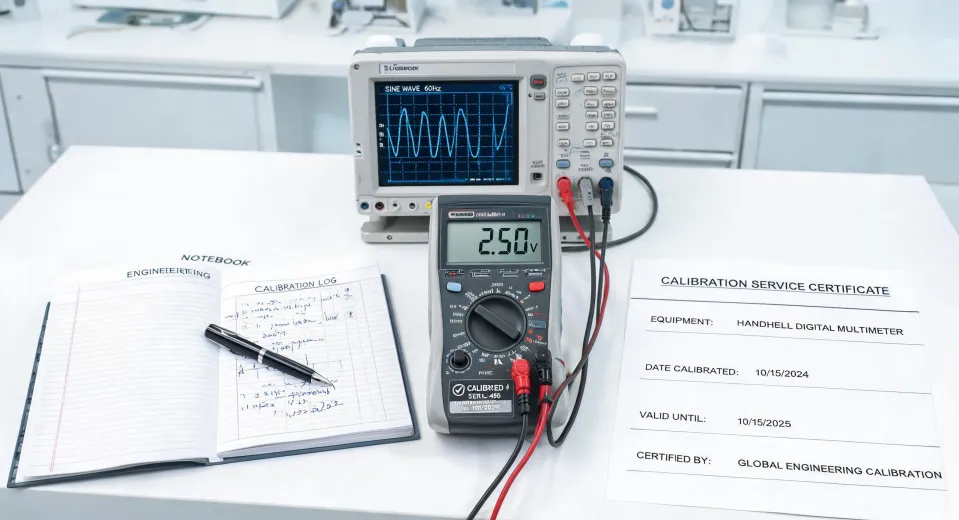
7. How often does a Fluke multimeter need calibration?
At least once a year for industrial use. If the meter is dropped, exposed to a voltage beyond its rating, or starts giving unstable readings, send it out now. Don't wait for the scheduled date.
The phrase 'Fluke meters are accurate forever' is a myth. They're stable, and they survive abuse better than most. But they're still precision instruments. Drift happens. I once sent a meter out for calibration and it came back with an offset we would never have caught in the field. The meter looked and behaved normally. It wasn't within spec.
Calibration is not a criticism. It's documented proof. In an ISO-controlled environment, that proof matters. And per IEC 61010-1:2010, a meter's CAT rating is about transient voltage protection, not long-term accuracy. A CAT IV meter can still be out of tolerance.
The real danger isn't a meter that fails completely. It's a meter that's wrong enough to mislead you but not wrong enough to notice. That's why the calibration schedule exists.

Marcus Feld
Marcus Feld is an electrical test and measurement analyst specializing in multimeters, oscilloscopes, clamp meters, insulation testers, spectrum analyzers, and data loggers. He applies IEC 61010-2-030 and IEC 61010-031 concepts while examining measurement category, bandwidth, true-RMS response, input loading, and stated uncertainty. His work helps maintenance engineers and test teams choose safe instruments with performance suited to the signals and environments they actually measure.