Fluke 77 Series 2, 116/323 Combo, 700G, and ifm Photoelectric Sensors: A Buyer's FAQ
-
Is the Fluke 77 Series 2 multimeter still worth ordering?
-
What about the Fluke 116/323 electrician's multimeter combo kit?
-
What is the Fluke 700G pressure gauge calibrator actually for?
-
Why does IO-Link matter for sensor purchases?
-
How durable are ifm photoelectric sensors vs. others?
-
What should I check before ordering Fluke or ifm through a new vendor?
-
Should we standardize all test equipment on Fluke?
Every few weeks, someone in our maintenance or engineering group asks me to order test equipment. After five years and roughly 150 purchase orders, I have learned one thing: the brand matters less than the spec, the calibration paperwork, and the vendor support behind it. Since the same questions keep showing up in my inbox, here is the FAQ I wish someone had handed me in 2020.
- Is the Fluke 77 Series 2 multimeter still worth ordering?
- What about the Fluke 116/323 electrician's multimeter combo kit?
- What is the Fluke 700G pressure gauge calibrator actually for?
- Why does IO-Link matter for sensor purchases?
- How durable are ifm photoelectric sensors vs. others?
- What should I check before ordering Fluke or ifm through a new vendor?
- Should we standardize all test equipment on Fluke?
Is the Fluke 77 Series 2 multimeter still worth ordering?
When I took over purchasing in 2020, we had two Fluke 77 Series 2 multimeters already on the shelf. They worked, but the series was already an older platform. The Fluke 77 Series 2 is fine for basic AC/DC voltage, resistance, and continuity checks if it is in calibration and used within its rated IEC 61010-1 category. For a new purchase in 2025, I would rather buy a current Fluke model or the 116/323 combo kit below. The old meters are hard to source new, and replacement parts can be a pain. If you already own one, keep it in service as long as it passes calibration. But do not order a new legacy model unless you have a specific reason.
What about the Fluke 116/323 electrician's multimeter combo kit?
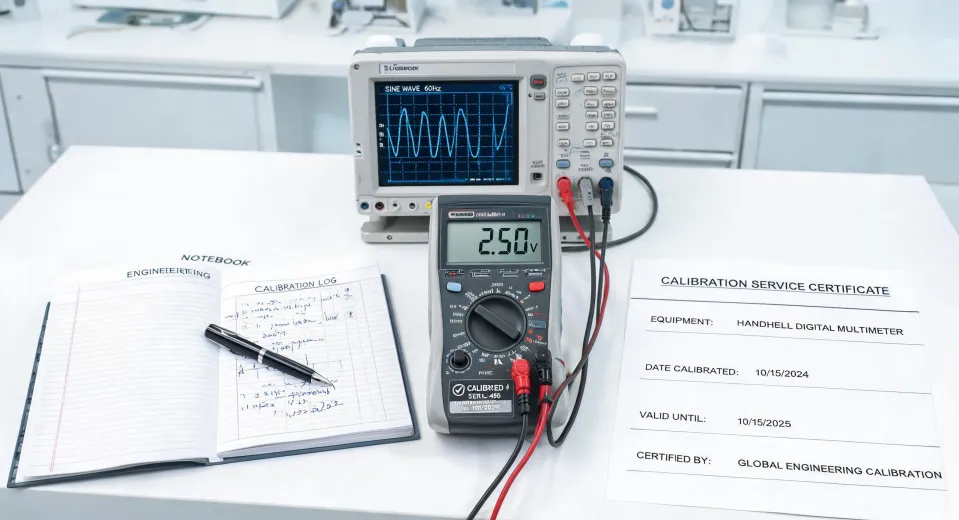
This is the kit I have reordered twice since 2022. The Fluke 116 is an electrician/HVAC multimeter (microamps for flame-sensor checks, built-in thermometer input). The Fluke 323 is a compact 400 A true-rms clamp meter. Together they cover most tasks in a typical facility. From my side, the combo kit is easier to manage than two separate tools: one SKU, one carrying case, fewer line items to reconcile. In our 2024 order, the kit came in at roughly 12% below the two meters bought separately, and the authorized distributor provided a NIST-traceable calibration certificate. That paperwork saves us from awkward questions in audits.
What is the Fluke 700G pressure gauge calibrator actually for?
We bought a Fluke 700G in 2023 after a technician asked for a way to verify pressure transmitters in the field. The 700G is a pressure test gauge and calibrator. You connect it to a hand pump or another pressure source, read the applied pressure, and compare it with the transmitter output. What makes it worth the cost is accuracy and traceability. If you only need a quick visual pressure reading, a cheaper gauge will do. But if your team is calibrating pressure switches or transmitters, the 700G gives them documentation instead of guesswork. One thing we learned: ask whether the kit includes a pressure pump. Without one, the 700G just reads pressure. The best part: when the commissioning report goes through without a question, that is the payoff.
Why does IO-Link matter for sensor purchases?
IO-Link is a standardized point-to-point communication protocol defined in IEC 61131-9. It does not replace a fieldbus; it connects individual sensors to an IO-Link master, which then communicates with the controller. The reason I care as a buyer: IO-Link sensors give you more than a detect/no-detect signal (they can report signal strength, temperature, operating hours, and configuration). That means a technician can pull diagnostics from a sensor instead of climbing onto a machine with a laptop. This is where the industry has changed. Ten years ago, a photoelectric sensor had one output and not much else. Now the same sensor can be a data source. The fundamentals have not changed—you still need a solid housing and clean optics—but the execution has changed. For new automation projects, I ask for IO-Link even when it is not in the original spec. Just confirm with the integrator that the existing control system has an IO-Link master; otherwise, you are only adding sensors that are not being used to their full potential.
How durable are ifm photoelectric sensors vs. others?
I have ordered ifm photoelectric sensors for conveyor and packaging lines since 2021. Some of them have been running in dusty areas for three years with no failures. In washdown areas, the IP67/IP68 housings and M12 connectors have been more dependable than cheaper optos we used in the same spots. The one failure we had was on a vibrating gate, and the diagnostics made it easy to tell whether the problem was the sensor or the cable. But I cannot give you a blanket ifm vs. everyone else verdict. Durability depends on the specific series, the housing material, and the IEC 60529 ingress-protection rating. An IP69K stainless sensor from any reputable maker will outperform a plastic unit with an IP54 rating, whatever the brand. What stands out with ifm is consistency and documentation. The IO-Link versions are also much easier to commission. My experience is based on about 30 sensor orders in dry, dusty, and occasional washdown environments. If you are dealing with aggressive chemicals or extreme temperatures, you need to check the datasheet, not the brand legend.
What should I check before ordering Fluke or ifm through a new vendor?
Three things. First, authorized distributor status. Marketplace deals can look good, but if the product fails and you cannot prove it is genuine, you own the problem. Second, calibration certification for the Fluke meters and the 700G. Make sure the certificate is current and NIST-traceable. We rejected a vendor once because their calibration certificate was a printed paragraph with no lab signature. That turned into a $1,200 order I had to push back on. Third, invoicing. A low quote does not help if finance cannot process the invoice. I have learned to verify invoice format before placing the order, not after.
Should we standardize all test equipment on Fluke?
No. Standardization is useful, but it can become a habit instead of a decision. In 2020, our company standardized on Fluke for most electrical test tools, and it made training and ordering easier. Then in our 2024 vendor consolidation project, we split the categories. Fluke remains the default for multimeters, clamp meters, and pressure calibrators because safety and accuracy matter most there. For simple non-contact voltage testers and consumables, we use less expensive options where the low-risk application allows it. That mix might not be right for every site. If you are working on 480 V panels every day, your calculation will be different. What I tell our team: buy the best tool for the specific risk, not the best brand in the catalog.

Marcus Feld
Marcus Feld is an electrical test and measurement analyst specializing in multimeters, oscilloscopes, clamp meters, insulation testers, spectrum analyzers, and data loggers. He applies IEC 61010-2-030 and IEC 61010-031 concepts while examining measurement category, bandwidth, true-RMS response, input loading, and stated uncertainty. His work helps maintenance engineers and test teams choose safe instruments with performance suited to the signals and environments they actually measure.