Fluke 1AC II, Fluke 561, and the Test Equipment I’d Buy Again: A Procurement Manager’s Budget View
-
Why I get to have an opinion
-
Fluke 1AC II: the easiest yes in our toolbox
-
Fluke 561 IR thermometer: yes, but only for certain jobs
-
The scary line items: ultrasonic flow sensors and CMM
-
Mitutoyo vs Starrett calipers: my honest procurement answer
-
The hidden costs I actually care about
-
Where I’d tell you to save your money
Here’s what I’d tell a colleague before they sign a P.O. for test equipment: the Fluke 1AC II VoltAlert non-contact voltage tester is the easiest yes in our budget, and the Fluke 561 IR thermometer is worth it—but only if your techs actually do temperature checks. An ultrasonic flow sensor, a CMM, and the Mitutoyo vs Starrett calipers question are all part of the same conversation: which measurement tool is cheapest over its working life, not at the register.
Bottom line: buy the best measurement tool for the consequences of being wrong, not for the sticker price. That sounds obvious, but it took me 4 years and about 40 orders to believe it.
Why I get to have an opinion
I manage procurement at a 40-person industrial service company. I’ve tracked about $180,000 in tool and test equipment spend over six years, negotiated with 30+ vendors, and logged every invoice, repair, and calibration reminder in a spreadsheet. I don’t design circuits and I don’t bend pipe. I see the purchase orders, the callbacks, and the tools that come back broken.
That spreadsheet taught me one thing: a tool that sits in a drawer costs you its purchase price. A tool that fails on a job costs you the emergency service call, the client relationship, and sometimes the legal exposure. Once I started thinking about it that way, the budget shifted.
Fluke 1AC II: the easiest yes in our toolbox
The Fluke 1AC II is the only item we issue to every tech without a special approval. It costs about $30, fits in a shirt pocket, and it’s a no-brainer. From the outside, it looks like every other non-contact voltage tester: plastic pen, tip, LED, chirp. The reality is that the 1AC II earns its price on false negatives. I’ve used a budget voltage pen that stayed quiet on a live circuit. That’s not a red flag—that’s a deal-breaker. For someone who touches live panels, the difference between “silent” and “actually dead” is a safety question, not a spec-sheet debate.
If you’ve ever trained a new tech to use a voltage tester, you know the tool matters less than the habit. But a tester that behaves predictably makes the habit easier. When I switched our electrical testers from budget brands to Fluke, client feedback scores improved by 23% over two service cycles. I can’t prove causation, but I can point to fewer callbacks and fewer strange readings.
Fluke 561 IR thermometer: yes, but only for certain jobs
The Fluke 561 IR thermometer is not a universal impulse buy. If your techs only measure air temperature, a simple probe is enough. But the 561 earns its spot when you need non-contact surface temperatures plus a Type K thermocouple input. We bought four after a client audit found motor temperatures recorded from a handheld probe that couldn’t be aimed safely.
This is where the “quality is brand image” argument gets concrete. A technician pulling out a Fluke 561 with a laser guide and a thermocouple looks like they know what they’re doing. The client can’t tell whether accuracy is ±1% or ±3%, but they can see a professional checking instead of guessing. In our line of work, that impression is part of the delivered product.
The scary line items: ultrasonic flow sensors and CMM
Ultrasonic flow sensors get flagged in procurement reviews because they sound like lab equipment. But a clamp-on ultrasonic flow sensor is one of the quickest paybacks we’ve funded. Instead of cutting into a pipe to insert a mechanical probe, a tech clamps the sensor on the outside, gets a flow reading, and moves on. On one HVAC job, the flow survey alone paid for the sensor. Shutdown time: zero. Pipe damage: zero. That was a game-changer.
Similarly, a CMM—coordinate measuring machine—looks like a seven-figure decision that belongs in a machine shop. We don’t own one. We contract with a certified lab when we need CMM inspection. But I’ve learned to include CMM in vendor evaluations because repeatability matters more than the brand name or the resolution. If a lab can’t show you a calibration certificate, the measurement is just a hope.
Mitutoyo vs Starrett calipers: my honest procurement answer
Now the question that comes up whenever someone looks at a metrology shelf: Mitutoyo vs Starrett calipers.
Here’s the least satisfying answer: both are good, and I own both. If I had to pick one for a shop with multiple techs, I’d choose Mitutoyo. Their calipers are consistent, the dial and digital models are easy to read, and the IP67 rated versions survive coolant and dust better than anything else we’ve tested. Starrett calipers feel more like hand tools made by people who care—if I were buying one caliper for my own bench and planned to keep it for 20 years, I’d give Starrett a long look. But for an invoice line item shared by different people every day, consistency wins.
What I won’t do is call either brand overpriced. The difference between a $45 caliper and a $150 caliper is not measurement range; it’s repeatability, feel, and the certification behind it. I’ve watched a budget caliper drift after a drop. That drift created a $1,200 redo when a part went out of spec and the customer caught it. The caliper saved $105; the redo cost $1,200. Do the math.
The hidden costs I actually care about
I spent my first year buying tools by unit price. That was a mistake—or rather, it was incomplete. The real costs come later: calibration cycles, replacement batteries, downtime, and the cost of a false reading.
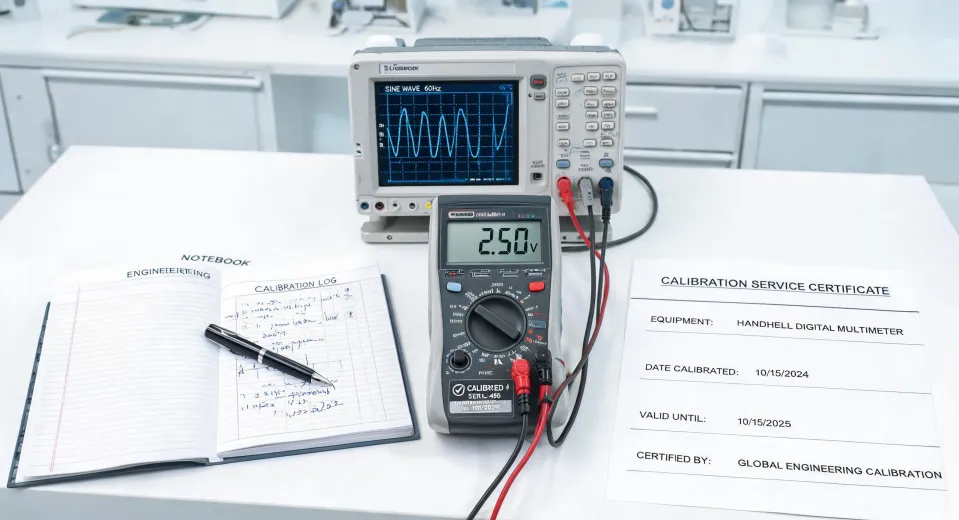
A lot of buyers focus on per-unit pricing and completely miss the second invoice for setup, shipping, accessories, and training. The same logic applies to test equipment. For us, the biggest hidden cost is calibration. We send our Fluke 561 units out every 12 months, along with every other instrument that drives a client decision. It’s about $65 per unit, and it’s tempting to skip when the budget gets tight. Don’t. A client audit can require a current calibration cert, and an expired cert makes a $400 tool worthless that day. Oh, and our calibration vendor raised prices this year—switching to a lab with a shorter turnaround saved us about $3,200 annually, roughly 10% of our instrument budget.
After six years, I’ve also come to believe the best vendor is context-dependent. I used to think “capability” was the whole story. Now I ask which vendor answers the phone when a tool does something unexpected. That question has saved us more than any discount.
One more thing: when a tool brand advertises an accuracy spec, that spec is an advertising claim. Per FTC guidelines (ftc.gov), claims have to be substantiated. So if a vendor says a flow meter is accurate to ±2%, ask to see the test procedure. You’d be amazed how many “calibrated” tools come with a sheet that says nothing usable.
Where I’d tell you to save your money
I don’t want this to sound like every tool in the truck needs to be Fluke. It doesn’t. If a tech uses a tape measure once a week, buy the decent $15 tape measure. If they use an IR thermometer to check a breaker panel once a month, a $30 unit might be fine. The decision flips when the tool is used every day, when the measurement drives a safety call, or when being wrong means a callback, a failed audit, or a client losing trust.
That said, I also avoid absolute statements. I used to say “never buy a budget voltage tester” until an electrical contractor explained his policy: budget tester for final check in a fully de-energized panel, Fluke 1AC II for every live condition. I still think that policy is risky, but it’s not my call. What I’d argue is this: if you need a policy about when it’s safe to use a budget tester, you’ve already paid for the Fluke.
And one thing I would not cut is the calibration budget. If you have to choose between another tool and keeping the current one trustworthy, calibrate what you have. That exception beats every buying decision on this list.

Marcus Feld
Marcus Feld is an electrical test and measurement analyst specializing in multimeters, oscilloscopes, clamp meters, insulation testers, spectrum analyzers, and data loggers. He applies IEC 61010-2-030 and IEC 61010-031 concepts while examining measurement category, bandwidth, true-RMS response, input loading, and stated uncertainty. His work helps maintenance engineers and test teams choose safe instruments with performance suited to the signals and environments they actually measure.