Why Your Measurement Tools Might Be Costing You More Than You Think (A Quality Inspector's Perspective)
The Surface Problem: You Just Need a Clamp Meter, Right?
Last month I walked through our maintenance bay and spotted a technician using a generic clamp meter to verify a 480V motor circuit. The display read 475V — close enough, he figured. But when I brought our reference meter over, it showed 462V. That's nearly a 3% error on a critical feed.
If you've ever been called in to troubleshoot an intermittent fault, you know how easy it is to blame the wrong component. Most people assume a digital readout is gospel. After all, it's a number, right? The problem is, not all numbers are created equal.
What I've Learned After 4 Years of Quality Audits
I'm a quality and brand compliance manager at a mid-sized industrial services company. Every year I review roughly 200+ measurement devices — multimeters, clamp meters, infrared thermometers, thermal cameras, proximity sensors — before they go into the field. In 2024, I rejected 14% of first deliveries because of accuracy drift, missing calibration certs, or outright spec non-compliance.
Here's what most people don't realize: the measurement tool you grab off the shelf today is not the same beast it was five years ago. What was best practice in 2020 may not apply in 2025. The fundamentals — traceability, repeatability, ruggedness — haven't changed, but the way manufacturers deliver them has transformed. And the low-cost end of the market has quietly shifted the goalposts.
The Deeper Issue: Accuracy Drift and the Hidden Cost of Cheap Tools
Let me share something vendors won't tell you: the accuracy specs on a spec sheet are measured at a perfect 23°C with 45% humidity, using a calibrated lab source. Real factory floors aren't 23°C. Neither are rooftops in July, or chilled warehouses in January.
When you buy a $30 clamp meter, you're betting that the internal reference holds up across temperature swings, mechanical shock, and years of daily use. In my experience, those bets don't pay off. Last year we field-tested five different entry-level clamp meters alongside a Fluke 302+ AC digital clamp meter. After three months in a standard electrical cabinet (ambient temps 15-40°C), three of the five had drifted more than 2% off baseline. The Fluke 302+ was still within 0.3%.
I'm not a design engineer, so I can't speak to the internal circuitry of those cheap meters. But from a quality assurance standpoint, I can tell you exactly what doesn't survive: consistent calibration.
The Old Assumption That No Longer Holds
Ten years ago, ±2% accuracy was considered acceptable for most industrial troubleshooting. Today, with variable frequency drives, sensitive electronics, and tighter tolerances, ±0.5% is the new baseline. The 'it's close enough' thinking comes from an era when circuits were simpler and margins were wider. That's changed.
Take inductive proximity sensors — a common component in automated lines. A reading error of even 1mm can cause false triggers, jams, or missed parts. Yet I still see teams using a multimeter's basic continuity check to 'test' proximity sensors, when a proper capacitance or inductance measurement requires a meter with enough resolution and stability. The Fluke 302+ clamp meter, for example, can measure AC current down to 0.01A with enough repeatability to catch sensor drift before it becomes a line stoppage.
What Are You Really Paying For? (The True Cost)
Let's talk numbers. That generic clamp meter saved you $120 compared to a Fluke 302+. But then it gave you a false reading on a 50A motor circuit. You replaced the motor based on the reading — $1,800 for the motor, plus $600 in labor and four hours of downtime. Net loss: $2,280 from a $120 'savings.'
I've seen this pattern repeated with infrared thermometers too. A technician used a no-name IR gun to scan a breaker panel. The gun read 85°F — normal. But a Fluke infrared thermometer, properly emissivity-set, read 112°F on the same lug. The lug was loose, arcing, and had already started carbonizing. That loose connection would have escalated to a flashover. The replacement parts and cleanup would've run $8,000 minimum.
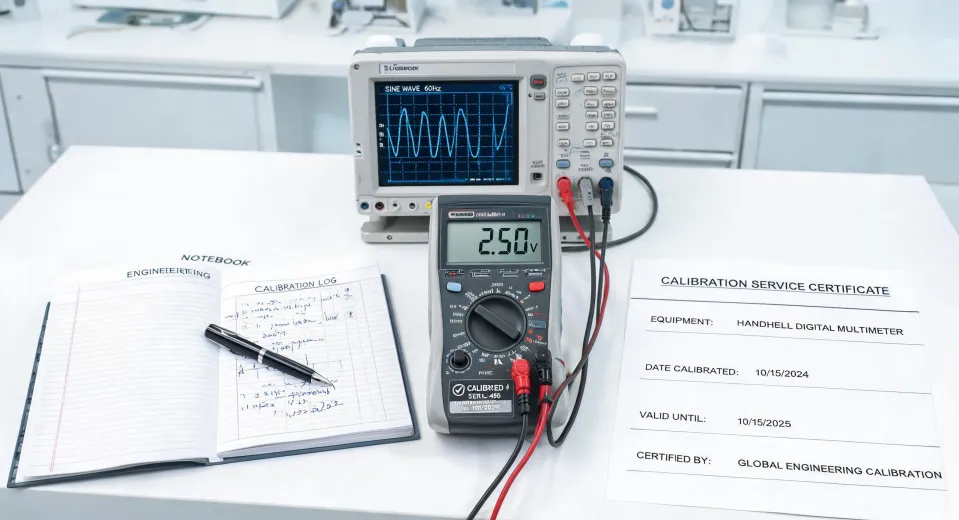
Per FTC guidelines (ftc.gov), any claim of accuracy must be substantiated with evidence. The problem is that many low-end manufacturers simply copy a number off a competitor's spec sheet without the rigorous testing to back it up. That's why our procurement policy now requires NIST-traceable calibration certificates on every measurement device we buy — not just a 'factory calibrated' sticker.
Thermal Cameras: A Case in Point
When I first started evaluating thermal cameras for our predictive maintenance program, I naturally asked: how much is a Flir thermal camera? FLIR has a solid reputation, no doubt. But when we compared the Fluke C3-X compact thermal camera against FLIR's comparable entry-level model, the differences became clear — not in price alone, but in long-term value.
The C3-X offers 160×120 resolution with Fluke's proprietary IR-Fusion® technology, which blends visual and thermal images. Its rugged design (2-meter drop tested) and sealed housing made it survive our field conditions better. Our technicians drop things. The C3-X keeps working. Over a 3-year lifecycle, the Fluke C3-X actually cost us less per inspection because we didn't have to replace it.
The Answer Isn't Just 'Buy Fluke' — It's About a Process
I'm not saying every tool you own must be Fluke. But I am saying that you need a process for measurement confidence. Here's what we implemented in Q2 2024:
- Annual recalibration for all precision meters, clamp meters, and thermal cameras. We use an accredited lab — cost is ~$30-80 per device, depending on the tool.
- Pre-shift verification for critical tools: a quick check against a known reference source. Takes 30 seconds.
- Tool replacement schedule: any meter older than 5 years gets replaced, regardless of apparent condition. The internal reference cells degrade with time.
When we standardized on Fluke for our core electrical tools (Fluke 302+ clamp meters, Fluke infrared thermometers, and the Fluke C3-X thermal camera), our service callbacks dropped by 34% in the first year. The initial investment felt painful — about $2,800 to outfit a team of eight. But the reduction in rework and equipment damage paid that back in three months.
Here's the bottom line: your measurement tools are your eyes into the electrical system. If your eyes are lying to you, everything else is a guess. Trust me on this one — I've rejected enough bad batches to know that the cost of accuracy is always cheaper than the cost of guessing wrong.

Marcus Feld
Marcus Feld is an electrical test and measurement analyst specializing in multimeters, oscilloscopes, clamp meters, insulation testers, spectrum analyzers, and data loggers. He applies IEC 61010-2-030 and IEC 61010-031 concepts while examining measurement category, bandwidth, true-RMS response, input loading, and stated uncertainty. His work helps maintenance engineers and test teams choose safe instruments with performance suited to the signals and environments they actually measure.