Fluke Multimeter HVAC Buying Guide: Reviews, Thermal Cameras, and Where to Buy
Quick answer: yes, but only if you buy the right model. I'm the office administrator for a 40-person facilities company. I place all our test equipment orders—roughly $60,000 a year across a dozen vendors—and I report to both operations and finance. When I first started buying test gear, I assumed the lowest quote was the best choice. Three budget overruns later, I learned about total cost of ownership. Here's what I tell people when they ask about Fluke.
- Is Fluke worth the money for HVAC work?
- Which Fluke multimeter is best for HVAC?
- What do Fluke 117 multimeter reviews actually say?
- What is the best thermal camera for us?
- What does centrifuge have to do with Fluke?
- Where should I buy a Fluke multimeter?
- Do Fluke meters need calibration?
Is Fluke worth the money for HVAC work?
In my opinion, yes—if you're buying it to make money. A multimeter is a diagnostic tool, not a shelf ornament. The total cost of ownership includes the purchase price, shipping, downtime, repeat service calls, and calibration. A meter that finds the fault on the first trip is cheaper than one that misses it and gets you called back. That's the part people forget.
In Q3 2024, I compared quotes for 12 multimeters across three suppliers. The lowest price was about $35 below our regular vendor. After freight and a processing fee, the difference basically disappeared. Now I calculate TCO before comparing any quotes. Does that mean every expensive meter is worth it? No. But for HVAC work—gas valves, flame sensors, compressors—a meter that reads what the tech actually needs pays for itself.
Which Fluke multimeter is best for HVAC?
People search 'Fluke multimeter HVAC' a lot. The answer is usually the Fluke 116. The 116 has a microamp range for testing flame sensors and a built-in temperature input for checking ducts and vents. That combination is what HVAC work really needs. The Fluke 117 is a better fit for electricians: non-contact voltage detection, AutoVolt, and low impedance mode. The 117 doesn't have the microamp range or temperature input that the 116 does.
According to Fluke product pages (accessed January 2025), the 116 is positioned as the HVAC meter. I've ordered both, and our techs agree: if you primarily work on furnaces and air conditioners, start with the 116. If you mostly troubleshoot wiring and panels, get the 117. Some techs carry both. That's not overbuying if it avoids a second trip.
What do Fluke 117 multimeter reviews actually say?
Consistent praise: durable, accurate, easy to read. Common complaint: price. That's the honest pattern in the reviews I've seen. The 117 isn't the cheapest meter, and it isn't the most feature-packed meter. But it does what it says. One of our electricians dropped his 117 from a ladder onto concrete. It survived. Not ideal, but it kept working.
Is it perfect? No. It lacks the microamp range, so it isn't the best Fluke for HVAC techs. It also has a learning curve if someone is used to a manual rotary switch. If you ask me, a meter you trust is worth more than one with a longer feature list. As of January 2025, the 117 still sells well for a reason: reliability. Just know what you're buying.
What is the best thermal camera for us?
Best depends on your work, not on the brand. For HVAC leak checks and electrical hot spots, we order a Fluke thermal imager. The TiS series is the starting point; TiS20+ for basic scanning, TiS55 or TiS75+ if you need more resolution. I'm not 100% sure of the current lineup as of January 2025, because Fluke updates models. Verify current specs on Fluke.com.
This worked for us, but our situation is a 40-person company with predictable repeat work. If you're a solo contractor doing one call a week, the calculus might be different. Your mileage may vary. The bigger point: choose a camera that can see the problem you're chasing. A lower-resolution camera might miss a small temperature delta, which leads to a missed diagnosis. That's exactly how you waste money. Personally, I'd rather buy one decent imager than two units that don't have the resolution our techs need.
What does centrifuge have to do with Fluke?
Strange pairing, right? Fluke doesn't manufacture centrifuges. If you're shopping for a centrifuge, you want a lab equipment brand, not Fluke. The connection I know of is Fluke Biomedical: their electrical safety analyzers are used in hospitals and labs to test powered equipment, including centrifuges.
We don't do that work, so I can only speak to the edge of my knowledge. I'm not 100% sure why the search association exists, but if you landed here because of Fluke and centrifuge, that's probably about biomedical testing. If you're a lab manager writing a purchase order, keep Fluke in mind for the safety analyzer, not the centrifuge itself.
Where should I buy a Fluke multimeter?
Start with Fluke.com or an authorized distributor. Fluke.com has a dealer locator. We also buy through industrial supply houses because they provide proper invoices and warranties. That matters more than it sounds. In 2020, I ordered several meters from a new vendor who flashed a great price. They couldn't provide a proper invoice, only a handwritten receipt. Finance rejected the expense report, and I ate roughly $2,400 out of the department budget. Now I verify invoicing capability before placing any order.
Online marketplaces can be okay, but only if the seller is an authorized Fluke distributor. Counterfeit test tools are a real problem, and a fake meter can show a safe circuit when it isn't. That's a risk I won't take.
Do Fluke meters need calibration?
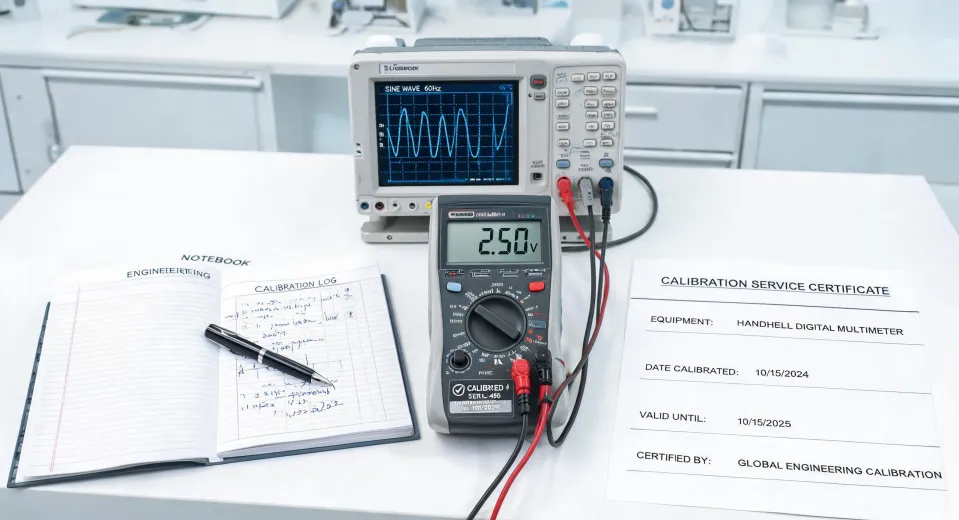
Yes. Any precision instrument does. For our Fluke handhelds, we use a one-year calibration cycle and budget it into the total cost. If you skip calibration, measurements are a guess. That doesn't mean a Fluke meter will fail calibration; most of ours pass. But 'never needs calibration' isn't a claim I'd trust from any manufacturer.
This was accurate as of January 2025. Check Fluke.com for current calibration recommendations. Calibration is a cost, but it's cheap compared to a wrong diagnosis.

Marcus Feld
Marcus Feld is an electrical test and measurement analyst specializing in multimeters, oscilloscopes, clamp meters, insulation testers, spectrum analyzers, and data loggers. He applies IEC 61010-2-030 and IEC 61010-031 concepts while examining measurement category, bandwidth, true-RMS response, input loading, and stated uncertainty. His work helps maintenance engineers and test teams choose safe instruments with performance suited to the signals and environments they actually measure.