Fluke Multimeter Guide: 87V, Automotive Meters, Data Loggers, and TG298
If you need a meter you can trust when the clock is loudest, the Fluke 87V is still the benchmark for electrical troubleshooting. It’s the one I grab first in an emergency callout, and it’s the one I tell apprentices to save up for. But the right Fluke in a breakdown isn’t always a multimeter. Sometimes it’s a thermal camera. Sometimes it’s a data logger.
I’m a field service tech with an industrial electrical contractor. I’ve handled 200+ emergency callouts over the past six years. In March 2024, I had 36 hours to find a recurring trip on a motor control center before the line restarted. The 87V caught the problem: a phase-to-phase voltage imbalance that the analog panel meter couldn’t show. We replaced a corroded disconnect, monitored overnight with a logging meter, and made the deadline. This is the advice I give my own team before they carry a Fluke into a bad situation.
Why Fluke earns its place in an emergency
When a plant manager is watching you, you don’t need a meter that’s “probably right.” You need one that’s accurate, rated for the environment, and durable enough to survive a drop. What’s the catch? Price. Fluke meters are not cheap. They’re not intended to be. What you’re buying is certainty.
Take the 87V. It gives clean, stable readings on variable-speed drives, which is a real headache on meters without true-rms capability. It also carries the safety rating for industrial power systems. Why does that matter? Because the wrong reading in a live panel isn’t just an inconvenience. It can send you home with an arc flash injury.
I didn’t always appreciate that. I used to treat CAT ratings as a spec-sheet checkbox. Then I saw an old meter without a proper CAT rating arc-flash in a 277V lighting panel. That changed my mind faster than any safety video. Nobody was hurt, but the meter was finished. In that moment, I understood the difference between a tool that’s safety-rated and one that simply has a voltage setting on the dial.
The other thing I value is battery life. When I’m working through a shift with no easy place to plug in a charger, I don’t want to think about the meter dying. I’ve had an 87V run for months on a single 9V, even with the backlight on.
Which Fluke actually fits your work?
Here’s where I break with the “buy the most expensive catalog number” advice. In my opinion, the right Fluke is the one that matches the trouble you see every week.
For electrical and industrial troubleshooting: Fluke 87 multimeter. The 87V is the default for a reason. It measures AC/DC voltage, resistance, capacitance, and frequency, and its Min/Max mode catches intermittent dips. It also reads true-rms, which matters on VFDs and other non-sine waveforms. If you want one meter for commercial or industrial electrical work, that’s the one.
For automotive work: a dedicated Fluke automotive multimeter. A standard meter can measure battery voltage and resistance, but engine diagnostics often need pulse width, RPM, and other time-based functions. That’s where the 88V comes in. It’s built for automotive work. When you’re chasing a parasitic draw or a crank sensor, the 88V gives you the information without a separate adapter. I keep one in my road kit.
For HVAC: the Fluke 116. The 116 is popular with HVAC techs because it has a microamp range for checking flame sensors, plus a low-impedance mode that stops ghost voltages from fooling you. If the emergency is a furnace that won’t light, that microamp reading often tells the story before you open the gas valve.
For intermittent faults: Fluke data loggers. Not every fault happens while you watch. Intermittent failures are annoying because they vanish as soon as the meter is connected. That’s why I trust data logging. I’ve left a logging meter on a circuit overnight and found a voltage sag that lasted only two cycles at 3:00 AM. You can’t catch that by eyeballing a handheld display.
For heat-related failures: TG298 thermal imaging camera. I resisted thermal cameras for years. They sounded like something an infrared engineer would use, not a guy with grease under his nails. Then I scanned a breaker panel and found a terminal running 20°C hotter than everything around it. Loose connection. A compact unit like the TG298 lets you spot that without touching anything live. It’s not a high-end inspection camera, but for fast triage it’s usually enough.
How to use Fluke multimeters when the clock is running
How do you use a Fluke multimeter in a rush? Start with the process, not the dial.
First, identify what you’re chasing. Voltage tells you what the circuit is doing under load. Continuity is useful, but it won’t tell you if a connection is dropping voltage under current. So if possible, start with voltage.
Next, check the input jacks. On the 87V, current has separate jacks, and it’s a good idea to confirm your lead placement before touching the circuit. If a meter is set to ohms and you hit a live wire, you can damage the meter or something worse.
One thing people overlook: test leads matter as much as the meter. Cracked insulation or a loose banana plug can cause false readings, and on live gear that’s a real problem. I replace leads at the first sign of damage.
Use the right range. Auto-ranging helps, but manual range selection often fixes false readings on noisy circuits or low-voltage signals. And for intermittent faults, turn on Min/Max. That records the peaks while you check everything else.
If the fault seems heat-related, scan the panel first with the TG298, then follow up with the meter. If the fault is still invisible, leave a logger on the circuit overnight. That captures the evidence while you catch some sleep.
That’s the whole workflow. Voltage first. Safety first. Then data.
Where Fluke doesn’t make sense
Let me be honest. Fluke isn’t always the right answer. If you only need to check a 12V battery or test a household outlet, a basic multimeter will do that job. Fluke’s value shows up when a wrong measurement has real consequences: downtime, safety, or a misdiagnosed component.
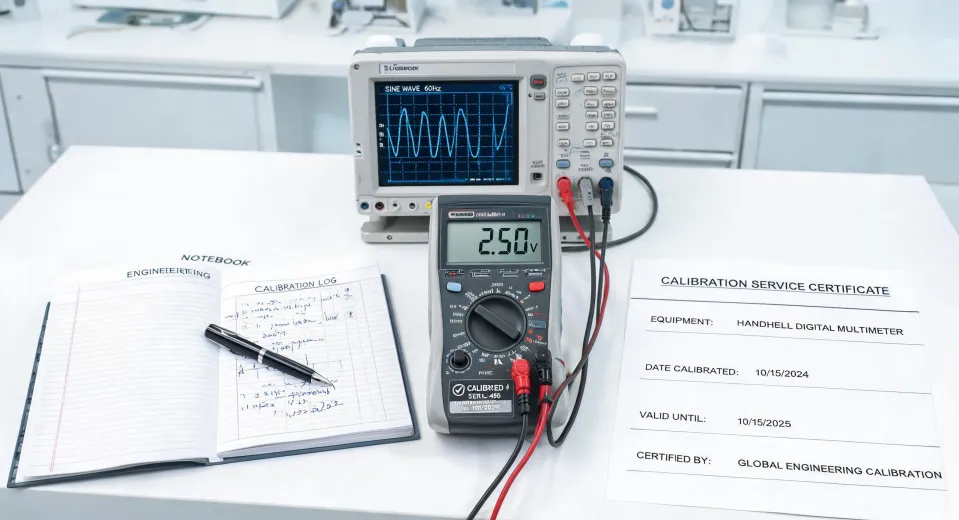
There’s another limit. Any precision meter needs calibration. Fluke meters drift too. We send ours out on a 12-month cycle, and I’d recommend the same to anyone who earns a living with one.
The TG298 is also a first-line screening tool, not a full thermal audit solution. It helps you find the hot spot, but it doesn’t tell you why it’s hot. And a data logger records the evidence; you still have to interpret it.
I have mixed feelings about used Fluke deals. A used model can save you money, but if you don’t know its service history, you’re buying someone else’s uncertainty. I’ve seen meters sold as “working” that drifted way out of spec. Unless the seller can show calibration paperwork, I keep my wallet closed.
In my experience, a tech who knows how to use a $20 meter carefully will get better results than a confused tech with the most expensive meter on the market. The tool just removes uncertainty faster. That’s the part worth paying for.
If you ask me what to buy today, I’d say this: for industrial electrical work, make the 87V your benchmark. For automotive work, get a dedicated Fluke automotive multimeter like the 88V. If you can only add one more tool to the truck, make it a TG298 or similar thermal imager. Add a data logger when intermittent faults start eating your weekends.
Buy the best you can justify, maintain it, and learn how to use it before the plant manager is watching over your shoulder. That’s how you save the job.

Marcus Feld
Marcus Feld is an electrical test and measurement analyst specializing in multimeters, oscilloscopes, clamp meters, insulation testers, spectrum analyzers, and data loggers. He applies IEC 61010-2-030 and IEC 61010-031 concepts while examining measurement category, bandwidth, true-RMS response, input loading, and stated uncertainty. His work helps maintenance engineers and test teams choose safe instruments with performance suited to the signals and environments they actually measure.