Fluke Multimeter FAQ: Which Model to Buy, Price, and Where to Find One Near You
-
Everything You Actually Need to Know About Buying a Fluke Multimeter
-
1. “Which Fluke multimeter should I buy?”
-
2. “What’s the Fluke 179 multimeter price?”
-
3. “Where can I find a Fluke multimeter near me?”
-
4. “What about the Fluke 1577 insulation multimeter? Is it worth the jump?”
-
5. “What’s the most common mistake people make when choosing a Fluke?”
-
6. “Does Fluke make outside micrometer sets?”
-
1. “Which Fluke multimeter should I buy?”
Everything You Actually Need to Know About Buying a Fluke Multimeter
If you're looking at Fluke meters, you already know the brand stands for reliability. But between the 115, 179, 87V, and the 1577 insulation tester—plus searching for “Fluke multimeter near me”—the options can blur. I’m a quality compliance manager who reviews test equipment specs for production lines (roughly 150 instruments per year). Here’s what I’d tell a fellow engineer or technician before they spend their budget.
1. “Which Fluke multimeter should I buy?”
Short answer: it depends on your daily work. For general electrical troubleshooting (residential or light commercial), the Fluke 115 is a solid, affordable choice—true RMS, CAT III 600V, and compact. If you need a bit more precision for HVAC or industrial panels, the Fluke 179 adds a 0.09% basic DC accuracy and a microamp range for flame sensor testing. For heavy industrial or power distribution, the 87V is the gold standard: CAT IV 600V, 0.05% accuracy, and a built-in low-pass filter for variable frequency drives. And if you're testing motor insulation or cable integrity, the 1577 insulation multimeter combines a 1000V insulation tester with a full-featured multimeter—saves carrying two boxes.
The mistake I see most often: buying based on price alone, then discovering the meter can't handle the environment (like missing CAT rating for the panel you're working on). I rejected a batch of meters in our Q1 2024 audit because the vendor claimed CAT III but the creepage distances didn't meet UL standards. That redo cost us $7,000 and delayed our line startup. So match the meter to your worst-case working condition, not your typical one.
2. “What’s the Fluke 179 multimeter price?”
As of early 2025, the Fluke 179 typically retails between $380 and $450 USD. You'll see lower prices on Amazon or eBay, but be careful—counterfeit Flukes are unfortunately common (note to self: verify serial numbers on Fluke's website). Genuine units from authorized distributors (like Grainger, McMaster-Carr, or Fluke's own store) run closer to $420. If you need the 179 with a temperature probe and case, the kit price can push $500. I learned this price range back in December 2024 when I had to source a replacement for a damaged meter overnight—paid $439 from an authorized distributor with rush shipping. In hindsight, ordering a week earlier would have saved $60.
One thing most people overlook: the Fluke 179 is not the newest model—it's been around for years. That doesn't make it obsolete; its accuracy specs and reliability are still excellent. But if you see a price under $300, it's almost certainly used or a knockoff. Don't risk your safety to save a hundred bucks.
3. “Where can I find a Fluke multimeter near me?”
For urgent needs, local electrical supply houses (like Graybar, Rexel, or your regional industrial distributor) often stock common Fluke models. HVAC supply stores also frequently carry the 116/117 series. I keep a list of three local vendors I've vetted—they've never sold me a counterfeit. The downside: their prices are usually 10–15% higher than online, and inventory varies. You can also check “Fluke multimeter near me” on Google Maps, but call first—I've driven to three stores before finding one with the 87V in stock (that was back in 2023).
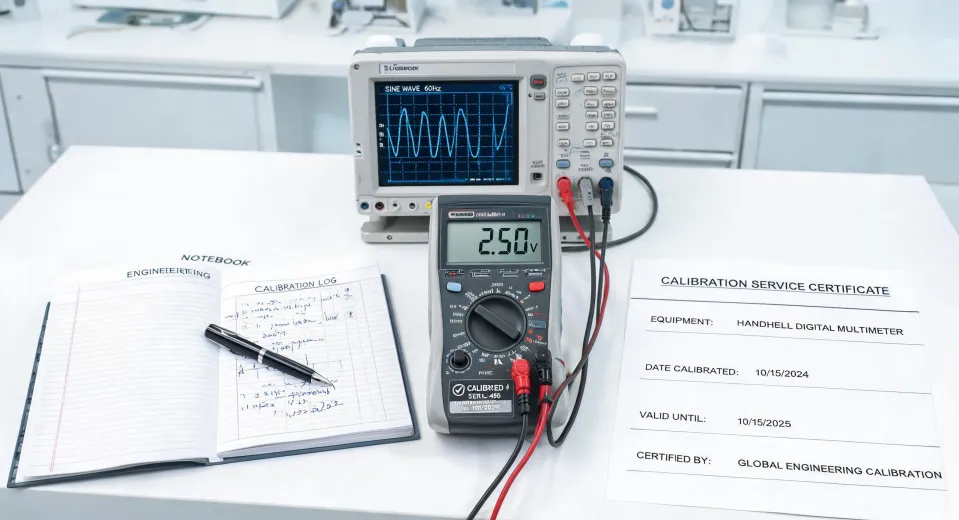
If you're not in a rush, ordering from Fluke's official website or an authorized online retailer (like TestEquity or Transcat) ensures authenticity. Shipping is usually 2–5 business days. Pro tip: ask if they offer a calibration certificate with the meter. Some distributors include a traceable certificate at no extra cost—that saved us from having to send it out immediately.
4. “What about the Fluke 1577 insulation multimeter? Is it worth the jump?”
The 1577 combines a 1000V insulation tester with a True RMS multimeter (similar capability to the 179). It's roughly $750–$850 new. I was skeptical at first—having two tools in one box sounds like a compromise. But after using one for motor and cable testing in a manufacturing plant, I changed my mind. You can megger a motor winding (up to 2000 MΩ), then immediately check voltage or current without switching tools. For field service, that saved about 20 minutes per test point.
The catch: the multimeter side lacks some advanced features like the 87V's low-pass filter and peak hold. So if you primarily do VFD troubleshooting, the 1577 might not replace your primary meter—it's more of a specialized tool for insulation testing with multimeter convenience. I had a two-week period where I second-guessed buying it (what if I should have just bought a separate megger?), but after the third time I caught a degraded cable before it caused a downtime, the satisfaction was real.
5. “What’s the most common mistake people make when choosing a Fluke?”
Overlooking calibration and accessories. I'm not a metrology specialist, so I can't speak to every standard, but from a quality perspective: a meter is only as good as its calibration. Fluke meters are typically calibrated to NIST-traceable standards, but if you drop it or expose it to extreme conditions, the accuracy drifts. I implement a 12-month recalibration cycle for all field meters, and we rejected 3% of first deliveries in 2024 because of out-of-spec units that were dropped (note to self: enforce carrying cases).
Also, people forget test leads. The average set of Fluke TL175 leads lasts about 18 months in industrial use. Replace them before they crack—a faulty lead can give false readings and is a safety hazard. The 5 minutes you spend inspecting leads before a job can save a 5-day investigation later (prevention beats cure, every time).
6. “Does Fluke make outside micrometer sets?”
No—Fluke specializes in electrical and temperature test equipment, not mechanical measurement tools. For outside micrometers, you'd look at precision tool manufacturers. I've had to order both Fluke meters and micrometers for different projects, so they're complementary in a tool crib, but not from the same brand. Just something to keep in mind when planning your budget.

Marcus Feld
Marcus Feld is an electrical test and measurement analyst specializing in multimeters, oscilloscopes, clamp meters, insulation testers, spectrum analyzers, and data loggers. He applies IEC 61010-2-030 and IEC 61010-031 concepts while examining measurement category, bandwidth, true-RMS response, input loading, and stated uncertainty. His work helps maintenance engineers and test teams choose safe instruments with performance suited to the signals and environments they actually measure.