A Buyer’s Honest Take: Fluke DC Voltage Testers and Multimeter Kits for Automotive and Shop Floor Use
For automotive and shop-floor electrical troubleshooting, you want a Fluke 117 or a 179 kit. The 177 is a solid meter if you find a deal, but the feature set on the 117 and the versatility of the 179 kit make them the best bets for most maintenance teams. That’s the short answer. If you’re managing purchasing for a small-to-mid-sized team—like I do—you probably want the reasoning and a few real-world caveats before you cut a PO.
I’m the office administrator for a 45-person industrial services company. I manage all our tool and instrument ordering—roughly $60,000 annually across 8 or so vendors. When I took over purchasing in 2020, our senior techs were using a grab-bag of meters, including old analog units and a couple of cheap digital ones that had questionable accuracy. My first consolidation project was standardizing our test equipment. After 5 years of managing these relationships and processing 60-80 orders a year, here’s what I’ve learned about buying Fluke DC voltage testers and multimeters, specifically for automotive and general electrical use.
Why Fluke for Automotive and Electrical Work?
It’s not just brand loyalty. Fluke’s reputation for durability is earned—I’ve seen a 179 survive a 6-foot drop onto concrete and still read accurately. For automotive work, you need a meter that can handle vibration, grease, and the occasional bump. The other key is the True RMS capability. In the real-world environment of a shop floor, signals aren’t clean sine waves. A non-TRMS meter will give you incorrect readings on variable frequency drives, PWM signals from modern ECUs, or any non-linear load. The Fluke 117 and 179 both offer this, and the 177 does too.
But here’s the thing—the 179 Multimeter Kit is a value play that most people overlook. They see the $400+ price tag on the meter alone and balk. But the kit comes with the TL75 test leads (which are good, not great), the 80BK-A temperature probe, an alligator clip set, and a soft carrying case. If you price those accessories separately, the kit often saves you $60-80. For our team of 12 field techs and 4 shop guys, standardizing on the 179 kit meant everyone had the same leads and a temperature probe for HVAC troubleshooting. That consistency saved us headaches.
The 117 vs. 179: The Real Difference for Automotive
The Fluke 117 is the go-to for electricians and automotive techs. It has VoltAlert (non-contact voltage detection), which is genuinely useful for quickly checking if a wire is live. I’ve seen guys use it to trace circuits without clipping leads. The 179, on the other hand, is a general-purpose meter with a higher accuracy spec (0.09% vs 0.7% for the 117) and a wider capacitance range. For automotive—checking battery voltage, alternator output, sensor resistance, injector pulse—the 117 is plenty. For HVAC, where you might measure microfarads on a capacitor, the 179’s capacitance range (up to 10,000 µF) is a better fit.
So, if you’re buying for a mixed shop: Get the 179 kit. The temperature probe alone makes it worthwhile for HVAC calls. If your team is strictly automotive, the 117 is a more cost-effective choice. The Fluke 177 True RMS Multimeter sits in the middle. It’s basically a 179 without the temperature measurement. Decent meter, but I’d rather spend the extra for the 179 kit and get the probe. Not a bad choice, but... not the best value.
A Pitfall: The ‘Never Needs Calibration’ Myth
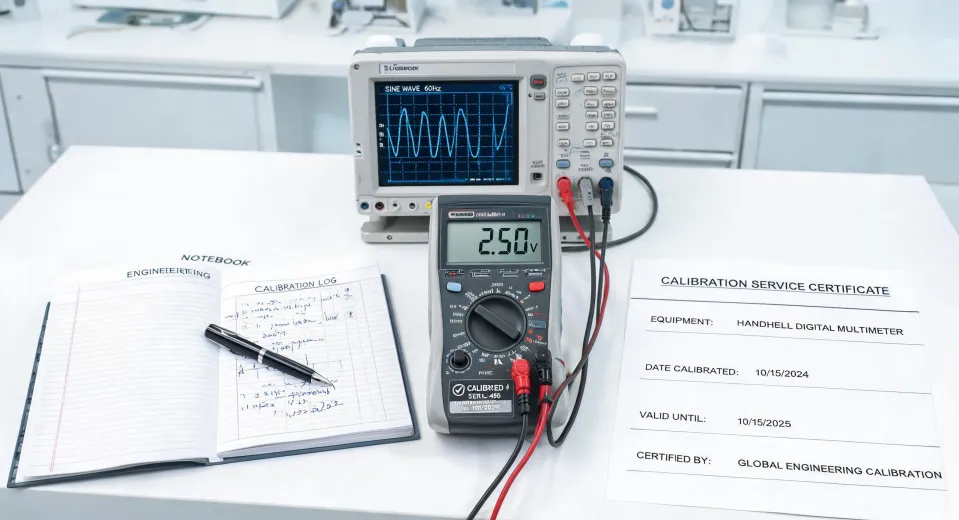
This was true 15 years ago when all meters were analog. Today, digital meters—even Flukes—require periodic calibration. I knew I should’ve budgeted for annual calibration, but in the rush of 2022, I thought, “What are the odds a meter goes out of spec in a year?” Well, the odds caught up with me when a tech’s 179 started reading 0.5V high on a 12V battery. It was subtle enough that he didn’t notice until he compared it to a known reference. That one meter cost us a misdiagnosed alternator issue and a $200 wasted part. Now, I factor calibration into the purchase cost. Most Fluke meters have a 1-year calibration cycle, but some high-use units might need it every 6 months. (Should mention: we now use a third-party calibration service that costs about $75 per unit, vs. $120 from Fluke.)
On Reading a Sensus Water Meter
Now, this is outside the normal scope of a multimeter, but I get asked about it because our team does some facility work. A Fluke DC voltage tester is not the tool to read a Sensus water meter. The surprise for me was how often people assume you can use a multimeter to check the pulse output of a water meter. Most Sensus meters use a reed switch or a Hall effect sensor that outputs a pulse for a given volume (usually 1 gallon or 10 gallons). You can use a multimeter on the continuity setting to verify the switch closes, but it’s not straightforward because the pulse is typically a dry contact. You need a pulse counter or a PLC to totalize the flow. I have mixed feelings about this—on one hand, it feels like a missed opportunity for a Fluke tool. On the other hand, using a multimeter for this is like using a screwdriver as a chisel. It’ll work in a pinch, but you’ll damage it eventually. The proper way is to read the meter’s display or use a dedicated datalogger. If you must use a multimeter, set it to continuity and watch for the beep as water flows. It’s a manual, imprecise method.
Options for Non-Automotive Needs
If your team is working on high-voltage stuff (480V+ panels), you might want the Fluke 87V. It’s overkill for automotive—fewer features you’ll actually use, and a higher price. I’ve seen people buy the 87V because it’s the “best,” but they’re paying for 0.05% accuracy they never use. Know your boundary.
Also, watch out for the Fluke Dc Voltage Tester as a keyword. It usually refers to the Fluke T+PRO or similar pen testers. Those are fantastic for quick voltage checks, but they do not replace a full multimeter. They show presence only, not discrete values. For diagnostics, you still need a meter.
Bottom Line for the Buyer
I’d rather work with a specialist like Fluke who knows their limits than a generalist meter brand that overpromises. The vendor who told me, “The 177 is fine, but for your HVAC guys, get the 179 kit,” earned my trust for everything else. For automotive work, get the 117. For HVAC and general electrical, the 179 kit is the better investment. Don’t skip calibration, and don’t try to read a water meter with a multimeter—that’s not what it’s for. Prices as of January 2025 (verify current rates): Fluke 117 around $250, Fluke 179 kit around $430, Fluke 177 around $370. Worth every penny for a tool that’ll last a decade if you treat it well.

Marcus Feld
Marcus Feld is an electrical test and measurement analyst specializing in multimeters, oscilloscopes, clamp meters, insulation testers, spectrum analyzers, and data loggers. He applies IEC 61010-2-030 and IEC 61010-031 concepts while examining measurement category, bandwidth, true-RMS response, input loading, and stated uncertainty. His work helps maintenance engineers and test teams choose safe instruments with performance suited to the signals and environments they actually measure.