Fluke AC/DC Clamp Meters: What I Actually Check Before Buying One (Or Recommending One)
If you're here because you searched "Fluke AC DC clamp meter," here's the short version: buy the one that has the DC current range you actually need, and don't overpay for accuracy you won't use. That matters more than any brand loyalty debate.
My job is quality compliance. I review electrical test equipment specifications before we put them on our approved tool list, and I've rejected a fair share of vendor submissions that looked good on paper but failed in practice. Over the past 4 years, I've evaluated about 200 instruments for our team, and Fluke is the one name that consistently shows up — not because it's the cheapest, but because the specs hold up under real conditions.
The First Distinction: AC-Only vs. AC/DC
A lot of people assume "clamp meter" means AC only. That's true for many basic models, but it's the single biggest mistake I see when teams pick tools for industrial work. If you're troubleshooting variable-frequency drives, battery systems, or solar installations, you need DC clamp measurement. That's the difference between a $150 meter and a $400 meter.
Fluke's AC/DC clamp meters typically include a Hall-effect sensor. That's what allows DC current measurement without breaking the circuit. I'm not an electrical engineer, so I can't explain the physics as deeply as a design specialist could. What I can tell you from a spec-review perspective is: if the datasheet says "DC current" and "Hall-effect," that's the feature set you're paying for.
One Feature People Forget: K-Type Thermocouple Support
The Fluke K type thermocouple compatibility is one of those things that sounds minor until you need it. Several Fluke clamp meters and multimeters accept standard K-type probes, which means you can measure temperature with the same tool you're already carrying. For HVAC diagnostics, that's a practical advantage.
I assumed every meter in this class supported K-type thermocouples. Didn't verify — until I collected user feedback from our technicians and realized two of our cheaper backup meters didn't. That was a hidden training cost. Now I check the manual before we approve anything.
Fluke 376 vs. Fluke 336: It's About Ampacity, Not Accuracy
Here's where I get asked the most: "Should I buy the 376 clamp meter or the 336 clamp meter?"
The 376 goes up to 1000 A AC/DC. The 336 goes up to 600 A AC/DC. For most building maintenance and commercial electrical work, 600 A is enough. But if you're working around main breakers, large motors, or heavy industrial feeders, the headroom on the 376 is worth it.
The 376 also includes iFlex compatibility, which lets you use a flexible current probe to reach awkward conductors. The 336 doesn't. That alone can be the deciding factor for panel work — wrapping a flexible probe around a crowded busbar is a lot easier than trying to fit a standard jaw.
If 80% of your work is under 600 A and you rarely deal with tight spaces, the 336 is the honest recommendation. If you're opening 800 A feeders, don't buy the 336 and hope for the best. That's not a knock against the 336. It's a limitation that should be respected.
FLIR Multimeter vs. Fluke: A Calibration Perspective
The "FLIR multimeter vs Fluke" comparison is more interesting than people expect. FLIR isn't a budget brand — they make serious thermal imaging tools. But when it comes to multimeters, Fluke's advantage is consistency across a wider range of measurement types.
In our Q1 2024 quality audit, we tested a FLIR multimeter against a Fluke 87V for basic AC voltage and resistance measurements. Both performed well. Actually, both performed very well. The difference showed up in the lesser-used features — continuity response time, DC current stability, and the ruggedness of the input jacks. That's not a lab-grade test, but it's the kind of thing our technicians notice in the field.
I get why people compare them. FLIR has a strong brand and integrated thermal tools. But if your primary job is electrical troubleshooting and you need a dependable multimeter, Fluke is the safer choice. If you're doing predictive maintenance on motors and panels, a thermal camera is a different tool category — and FLIR is a legitimate option there.
What I Recommend (And What I Don't)
Recommending tools is a balance between capability and cost of ownership.
- For general industrial maintenance: Fluke 376 clamp meter. The iFlex compatibility and 1000 A range make it future-proof.
- For HVAC and light commercial work: Fluke 336 clamp meter. It's lighter, simpler, and covers most residential and light commercial needs.
- For precision troubleshooting: Fluke 87V multimeter. It's not a clamp meter, but it's the gold standard for diagnosing intermittent electrical issues.
- For temperature needs: Pair any compatible meter with a Fluke K-type thermocouple probe. Verify compatibility in the manual first.
I don't recommend any clamp meter for extremely tight budgets if you're doing daily electrical work. The cost of a failed measurement — downtime, damaged equipment, or safety risk — far outweighs the savings on a cheaper brand. That said, if you're a hobbyist or working non-critical low-voltage circuits, a basic AC-only clamp meter from another brand is a fine starting point.
Boundary Conditions Worth Noting
Fluke isn't the perfect choice for every situation. If you're doing specialized work with extremely specific measurement requirements, you might prefer a bench multimeter or a dedicated instrument. Fluke's portable tools are designed for field use, not lab-grade metrology.
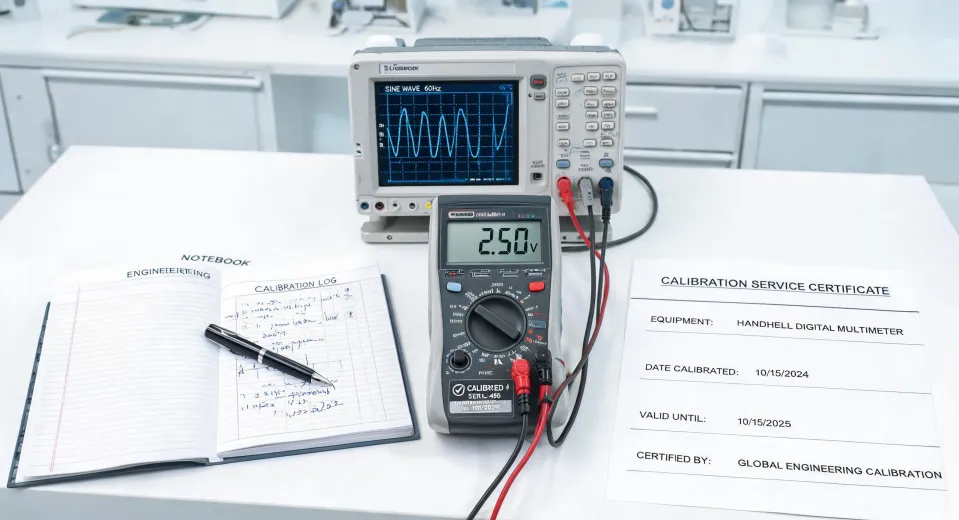
Also, calibration is non-negotiable. Every instrument drifts. I've rejected calibration certificates that didn't match the manufacturer's recommended intervals. (Note to self: follow up on our 376's annual calibration this month.)
And one more honest note: Fluke’s advantage is consistent quality, not magical components. A mid-range Fluke won't outperform a high-end Keysight bench meter in a lab. That's not the comparison anyone should be making.
If you're still deciding: pick a meter based on the highest DC current you'll measure, whether you need K-type thermocouple support, and how much space you have around the conductors. The brand will take care of the rest.

Marcus Feld
Marcus Feld is an electrical test and measurement analyst specializing in multimeters, oscilloscopes, clamp meters, insulation testers, spectrum analyzers, and data loggers. He applies IEC 61010-2-030 and IEC 61010-031 concepts while examining measurement category, bandwidth, true-RMS response, input loading, and stated uncertainty. His work helps maintenance engineers and test teams choose safe instruments with performance suited to the signals and environments they actually measure.