Buy, Rent, or Compare? Lessons from Ordering Fluke Multimeters, Raman Microscopes, and M8 Inductive Sensors
The Short Answer
Buy the Fluke tool your team uses weekly. Rent the Raman microscope you need for one project. And for an inductive sensor M8, compare Omron and Keyence on support before you compare spec sheets. That's the short version of what five years of purchasing for a 180-person engineering services company has taught me. The most expensive test equipment isn't the Fluke 189 on the bench; it's the tool that gets bought because it's 'good to have' and then sits in a drawer.
I manage procurement for a 180-person industrial services firm. I process 60-80 orders a year and roughly $150,000 in vendor spend across test equipment, lab services, and sensors. I'm not an engineer, and I don't pretend to be one. I just know what does and doesn't cause problems on the buying side. In our 2024 vendor consolidation project, I cut our sensor suppliers from four to two and learned more about M8 inductive sensors than I ever expected.
Fluke 75 Multimeter or Fluke 189 Multimeter? It Depends
I've written POs for both the Fluke 75 multimeter and the Fluke 189 multimeter in the last two years. The Fluke 75 is the old rugged one with the analog bar graph. It's easy to use, and it survives drops that would kill a phone. The Fluke 189 is a much higher-resolution meter with data logging and a 50,000-count display. It's the meter you want when you're chasing an intermittent signal or verifying a precise measurement. But 'more meter' is not always better for the person who has to carry it. Put another way: the right meter is the one your tech will actually carry.
Here's a concrete scenario: when we set up a motor control panel commissioning project, the lead engineer asked for a Fluke 189. The field tech doing preventative maintenance asked for a Fluke 75. They were both right. I don't think you need the most accurate meter on the market for every job. An old Fluke 75 covers a lot of ground. A Fluke 189 covers more, but it costs more, and the added buttons are annoying for a tech who doesn't need them. I recommend the 189 for serious troubleshooting, not for routine work. That's honest. It's also the opposite of what most equipment suppliers would tell you.
I always check published accuracy specs, not just the brand name. Fluke publishes them for each model, and when a supplier makes a claim about 'higher accuracy,' I ask for the specific test condition. Per FTC guidelines (ftc.gov), objective claims about performance need substantiation, so a datasheet or official app note is the only version I trust.
Raman Microscope Rental: The Purchase That Made Me a Renter
The Raman microscope rental decision was a turning point. We needed a Raman microscope for a material analysis project with a six-week timeline. Purchasing a new one would have gone through a capital expenditure review that could easily take four months. The rental cost was roughly $4,500 per month, plus shipping. That felt like a lot until I calculated the worst case: missing the client deadline and losing the follow-on work. I kept asking myself if $4,500 was worth avoiding that. It was.
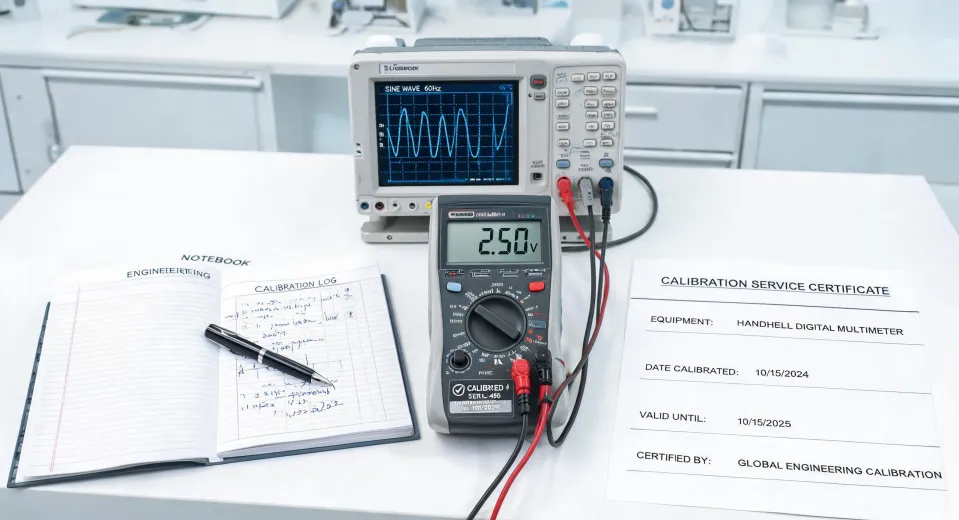
Here's what I almost got wrong. I assumed a rented instrument would arrive with all the right calibration documents. (Should mention: that's not always the case.) The first quote didn't include a NIST-traceable calibration certificate. The lab manager caught it before we signed. So glad we asked, because the add-on cert would have been another $600. If you're renting analytical equipment, ask for the calibration cert in writing before you commit. That's not a small detail.
We asked two rental vendors for quotes. One responded within 12 hours with a clear line item list. The other needed three days and then sent a PDF without rental terms. The slower vendor was slightly cheaper, but the faster response was worth more than the savings. Simple.
Renting isn't always better. If you have recurring demand for Raman analysis, buying one could be justified. But for a one-time contamination study, rental was the right call. Done.
Inductive Sensor M8: How Sensors Compare with Omron and Keyence
If you search 'how sensors compare with Omron and Keyence,' you'll get a lot of spec tables. That's useful, but not complete. For an inductive sensor M8, the key specs are sensing distance, switching frequency, output type (PNP/NPN), and cable length. Both Omron and Keyence make excellent M8 sensors. The difference I see as a buyer is the response when something goes wrong.
Omron is easier to source from local distributors. When I need an inductive sensor M8 with a PNP output in a hurry, Omron is usually the stock item. Keyence has strong applications support and will quickly send a representative with a demo case. Both are good, and the price difference on one sensor is small enough that it shouldn't be the deciding factor. In my experience, a late or wrong sensor shuts down a line and costs more than any price premium.
One difference I learned the hard way: nominal sensing distance on M8 sensors can be 1.5 mm or 2 mm, and shielded and unshielded versions behave differently in tight metal surroundings. A previous supplier once recommended a shielded sensor when the machine design required unshielded. We swapped it before production, but it cost us a day. That's why I now ask for the full spec sheet and the mounting conditions before ordering.
The conventional wisdom is that you should get three quotes and buy the cheapest. That's how I used to do it until one unreliable supplier delivered the wrong sensing range and cost us a day of downtime. A lesson learned the hard way. Now I compare support availability, calibration documentation, and return policy before comparing price. For M8 sensors, that might be more useful than 'Omron vs Keyence' brand loyalty.
Boundary Conditions: Where My Advice Stops
This advice is from an admin buyer, not an engineer. If you're in a regulated industry, a rented Raman microscope will need more than a calibration certificate—it may need full IQ/OQ/PQ documentation before you can use it for GMP work. I'm not 100% sure of every requirement, but I know it's more than a purchase order.
If you're a hobbyist or just need to check voltage at home, a Fluke 75 is a great tool, but you don't need a Fluke 189. A simpler meter is fine. If you're designing a new machine and comparing Omron vs Keyence for a production line, you need lifecycle support and integration planning that goes beyond what I do. Don't base that decision on this article alone.
One more thing I should add: the vendor that couldn't give a proper invoice cost us $2,400 in rejected expenses. Now I verify invoices before ordering, not after. That's not exactly a tool decision, but it's part of the same lesson. The right equipment with the wrong paperwork is not the right equipment.

Marcus Feld
Marcus Feld is an electrical test and measurement analyst specializing in multimeters, oscilloscopes, clamp meters, insulation testers, spectrum analyzers, and data loggers. He applies IEC 61010-2-030 and IEC 61010-031 concepts while examining measurement category, bandwidth, true-RMS response, input loading, and stated uncertainty. His work helps maintenance engineers and test teams choose safe instruments with performance suited to the signals and environments they actually measure.