Fluke Test Tools: Which Instrument Actually Fits Your Work?
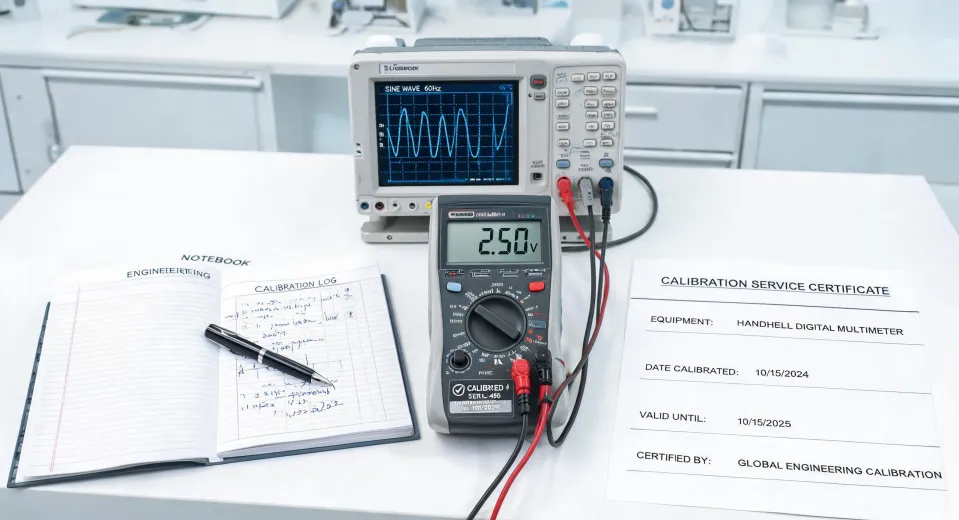
I've been handling instrument purchases for a mid-sized industrial plant for about six years now. In that time, I've personally made (and documented) enough mistakes to fill a small binder – roughly $2,800 in wasted budget from picking the wrong tool for the job. Now I maintain our team's pre-buy checklist, and I'm still adding items to it.
One thing I learned early: there is no one 'best' Fluke meter. The right choice depends on your specific work environment, the measurements you actually take, and whether you need data logging or not. Here's how I break it down.
Three Common Scenarios – Which One Are You In?
I've grouped most of the requests I see into three buckets. Each bucket has a different 'best' Fluke instrument. But before I get into the details, a quick warning: if you think you need a Fluke 700G hydraulic pressure gauge, stay out of the electrical bucket. I've seen people buy pressure gauges when they really just needed a clamp meter – it doesn't end well.
Scenario A: Everyday Electrical Troubleshooting (Industrial or Commercial)
You're working on motors, VFDs, control panels, or HVAC equipment. You need AC/DC voltage, resistance, continuity, maybe inrush current. You're moving around a lot, and you don't want to carry a separate data logger.
My recommendation: Fluke 117 True RMS Multimeter with a Fluke Connect module. The 117 is a solid all-rounder – it does True RMS, has 'VoltAlert' for non-contact voltage detection, and is built tough. If you add the Fluke Connect module (like the iFlex probe or the wireless i410), you can view readings on your phone from a distance. That's been a lifesaver when I'm working alone on a live panel and need to stay a few feet away.
Honestly, though, the 117 is overkill if you only work on household 120V circuits. But for industrial settings, the extra safety features are worth it. (note to self: remind the team not to assume 'good enough' applies – one guy got zapped using a cheap meter because it didn't have proper CAT rating).
Scenario B: Pressure Calibration and Hydraulic Systems
You're calibrating pressure transmitters, checking hydraulic presses, or testing pneumatic systems. You need a gauge that can handle high pressures – up to 10,000 psi or more – and you want it to be portable enough to carry into the field.
My recommendation: Fluke 700G Series (e.g., 700G05 for 5000 psi, 700G10 for 10,000 psi). These are rugged, accurate to 0.05% of reading, and have a built-in data logging feature. I've used the 700G to verify a hydraulic press that was supposed to deliver 3,000 psi – turned out it was only hitting 2,450 psi. Caught that before a $12,000 order went wrong. The 700G also comes with a calibration certificate, which helps with ISO audits.
But here's the catch: if you're primarily calibrating pressure transducers and need an external pressure source (a pump), you might be better off with a handheld pressure calibrator setup. The 700G is a gauge, not a full calibrator. (mental note: update checklist – many people confuse 'pressure gauge' with 'pressure calibrator').
Scenario C: Non-Electrical, Precision Measurements – When Fluke Isn't the Answer
Sometimes the question isn't about electricity at all. I've had colleagues ask about options for high-magnification optical inspection (think dental or lab microscopes) or about programming industrial weighing systems (like those from Rice Lake). Those are valid measurement needs, but Fluke doesn't make them.
For optical inspection: A Carl dental microscope (or similar surgical/lab microscope) is a completely different category – it's about visualization, not electrical testing. If you need to examine tiny solder joints or biological samples, you're looking at a microscopic tool, not a multimeter. I recommend going to the optical instrument specialists.
For weighing system programming: People ask 'what is Rice Lake weighing systems programming language?' The answer is that Rice Lake uses its own proprietary configuration software (often called IQ or 1350 series programming) that's specific to their indicators. It's not a general-purpose language like C++ – it's a parameter-based setup. If you need to program a Rice Lake 1200 series indicator, you'll want to get their Revolution software. That's a different skillset from running a Fluke instrument.
I'm mentioning these because I once assumed a Fluke pressure gauge could be used to calibrate a weighing scale's load cell output – it can't. The measurement principles are different. That error cost me a wasted afternoon and a terse call from the calibration lab.
How to Tell Which Scenario You're In
Here's a quick decision flow I use:
- Are you measuring voltage, current, or resistance? → You're in Scenario A. Get a Fluke 117 or 87V. If you need remote monitoring, add Fluke Connect.
- Are you measuring fluid pressure (hydraulic or pneumatic)? → You're in Scenario B. Go for the Fluke 700G. But check if you also need a hand pump – if yes, consider the Fluke 700PTPK pump kit.
- Are you measuring something that isn't electrical or pressure? → You might need an optical microscope, a weighing scale, or something else. Fluke doesn't cover that. Don't force it. Look for the specialist tool.
Last piece of advice: don't assume that because a tool is expensive, it's the right one. People think 'Fluke is expensive, so it must be overkill for my simple job.' Actually, the real cost is when you buy a meter without True RMS and then wonder why readings are off on variable frequency drives. That happened to me in 2021 – I bought a $40 meter to save money, and ended up replacing it with a Fluke 117 after three false readings cost us a production line shutdown. The cheap meter actually cost more in the long run.
Take it from someone who learned the hard way: pick the instrument that fits your specific work, not the one that looks impressive on the shelf. And if you're ever unsure, call a distributor – they've heard every mistake before. (I really should call them myself more often.)

Marcus Feld
Marcus Feld is an electrical test and measurement analyst specializing in multimeters, oscilloscopes, clamp meters, insulation testers, spectrum analyzers, and data loggers. He applies IEC 61010-2-030 and IEC 61010-031 concepts while examining measurement category, bandwidth, true-RMS response, input loading, and stated uncertainty. His work helps maintenance engineers and test teams choose safe instruments with performance suited to the signals and environments they actually measure.