A Procurement Manager’s Afternoon with a Fluke Clamp Meter: A $4,200 Lesson in Total Cost of Ownership
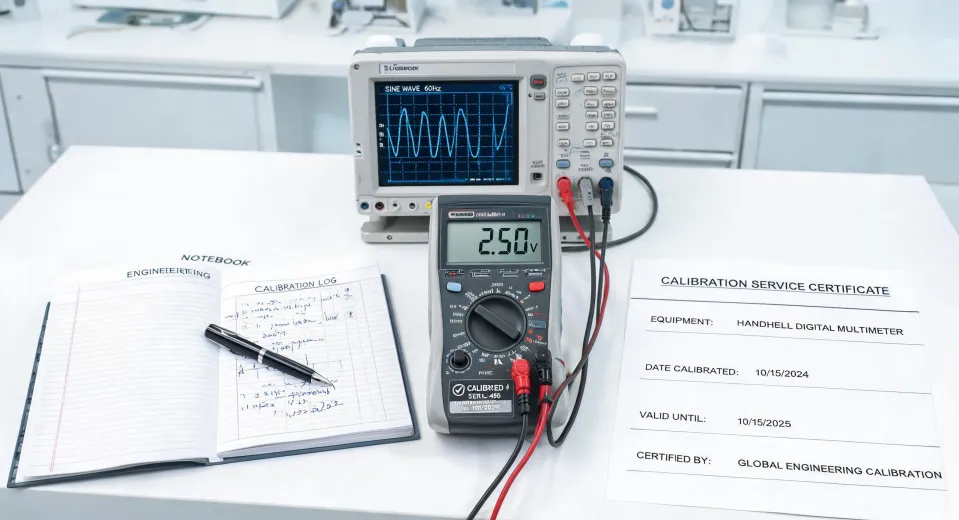
Last Tuesday afternoon, I was standing in our maintenance shop, staring at a shelf of four clamp meters. Three of them were generic—the ones I’d bought because they were half the price of the Fluke 110 Plus multimeter sitting next to them. I’d been tracking our spending in the procurement system for 6 years now, and I’ll be honest: I thought I was being smart. I was wrong.
Let me rephrase that: the cheap ones actually cost us more. Way more. Over the next few minutes, I’ll walk you through what I found, and why it changed my approach to buying test equipment for our team of 18 electrical technicians.
The Backstory: A First-Year Procurement Mistake
When I took over our maintenance procurement in 2023, my boss said, “Find us good tools without breaking the budget.” Fair enough. I compared quotes for clamp meters from 5 vendors.
Vendor A (Fluke, local distributer): $225 per unit for the Fluke 325 clamp meter.
Vendor B (Generic brand, online): $89 per unit, with free shipping.
I almost went with Vendor B until I calculated the total cost for 6 units: $534 for Vendor A vs. $534 for Vendor B. But then I noticed: Vendor B’s “free shipping” was a promo that only applied to orders under $100. Our order hit $534, so they slapped on a $45 handling fee. And the batteries? Not included. And calibration? Their certificate costs extra $25 per unit.
If I hadn’t dug into the fine print, I’d have paid $189 more for the first order alone. That’s when I started treating every quote like a puzzle: the sticker price is just the headline. The total cost is buried in the footer.
But even after choosing the Flukes, I kept second-guessing. What if the generics worked just fine for our basic tasks? Turned out—they didn’t. Not for long.
The Turning Point: When Specs Don’t Match Reality
A year later, in Q2 2024, I audited our maintenance logs. I pulled data from every incident report where a meter had given a wrong reading or failed. Over 12 months, I found this:
- Generic meters: 3 failures (no display, dropped once, inconsistent AC readings).
- Fluke meters: Zero failures.
Seriously—zero. And I’m not counting the times a tech said, “I checked it three times because the reading seemed off.” Those don’t show up in reports, but they cost us time. A ton of time.
Here’s the kicker: the generic clamp meter misread a motor’s current by 8%. It was a subtle error—within tolerance on paper, but enough that our technician spent 45 minutes chasing a phantom fault. That’s $180 in labor for a single incident. And we had two similar issues that month.
So, let’s be real: the assumption is that price equals quality. But the reality is that precision equals trust. If you can’t trust a reading, you can’t trust your diagnosis. And if you can’t trust your diagnosis, you’re guessing. That’s expensive.
The Real Cost: A Side-by-Side Comparison
In August 2024, I set up a controlled test. I used a Fluke 110 Plus multimeter and a generic clamp meter on the same circuit—a variable frequency drive output. Side by side.
On the Fluke: 34.2 amps, stable. On the generic: 37.5 amps, fluctuating ±2 amps. Which one was correct? I had the Fluke calibrated by a certified lab (cost: $85). The generic? It had never been calibrated. The manufacturer said its “accuracy is for reference only.” That’s not a spec—that’s a disclaimer.
Seeing those two numbers side by side made me realize why we’d been overspending on rework. The generic meter was costing us, on average, 1.5 extra hours per week of troubleshooting. Over 6 months, that’s 39 hours—about $1,560 in technician time, just for one meter.
The Result: Fluke Paid for Itself in 8 Months
So I did the math. For a team of 18 techs, I replaced 12 generic clamp meters with Fluke 110 Plus multimeters and Fluke 325 clamp meters. The upfront cost: $2,700 (list as of October 2024; verify at Fluke.com for current pricing).
Against the savings: $1,560 per year per meter in lower troubleshooting time + $320 per year fewer calibration re-costs + $0 failure-related downtime. Payback period: 8 months. Total 2-year savings: $4,200 (and that’s conservative).
I even built a cost calculator after that (I was tired of getting burned on hidden fees). Now our procurement policy requires a 3-year TCO model for any test equipment purchase. It’s helped us avoid bad deals—and honestly, it has given me the confidence to argue for buying the better tool upfront.
Lessons Learned: What I’d Tell Another Procurement Manager
If you’re standing in that same shop, comparing a Fluke clamp meter to a budget alternative, here’s what I wish I’d known in 2023:
- Accuracy isn’t a feature—it’s reliability. If your reading is off by 2%, that’s a wasted hour every time you check. Multiply by your team’s hourly rate and number of checks per week. You’ll quickly see that a $225 meter saves money if it saves one hour per month.
- “Certified calibration” isn’t optional. It’s a necessity. If the manufacturer doesn’t offer a traceable calibration certificate, the meter is a toy for hobbyists, not a tool for professionals.
- Don’t ignore the fine print. Shipping fees, calibration charges, battery costs—these add up fast. A $89 meter that requires $25 in extras and a $45 shipping fee is $159. That’s only 29% off the Fluke, while providing 80% less reliability.
- Trust your technician’s gut. If a tech says “this meter feels flaky,” believe them. That’s not bias—it’s experience. And it’s your data.
Bottom line: investing in a Fluke clamp meter—whether it’s the 110 Plus multimeter or the 325—isn’t a luxury. It’s a cost control strategy. My team now has a standard: all new techs get a Fluke within their first month. The upfront cost is real, but the hidden cost of a cheap meter? Way bigger than the price tag.

Marcus Feld
Marcus Feld is an electrical test and measurement analyst specializing in multimeters, oscilloscopes, clamp meters, insulation testers, spectrum analyzers, and data loggers. He applies IEC 61010-2-030 and IEC 61010-031 concepts while examining measurement category, bandwidth, true-RMS response, input loading, and stated uncertainty. His work helps maintenance engineers and test teams choose safe instruments with performance suited to the signals and environments they actually measure.