Why Your Multimeter Test Leads Kit Costs You More Than You Think – A Field Engineer’s Confession
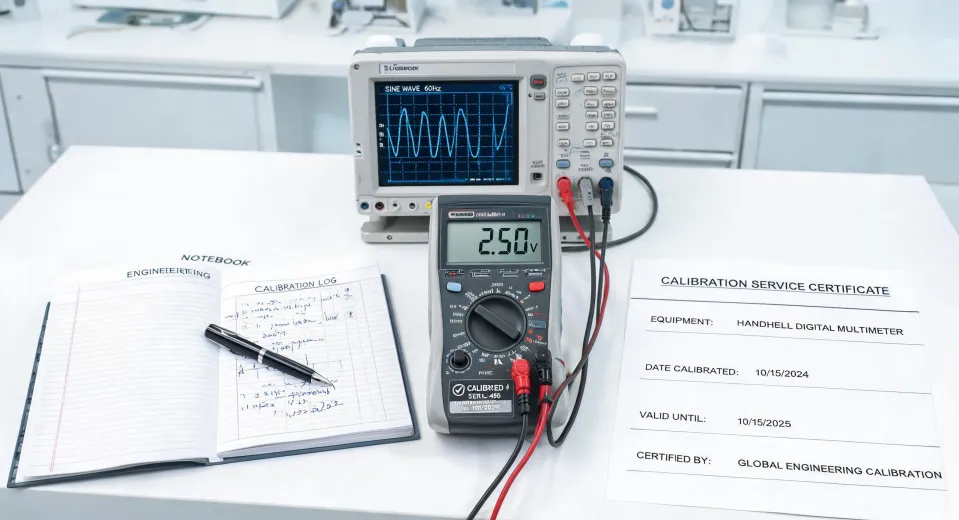
I Thought I Was Saving Money
In my first year as an industrial maintenance tech (2017), I bought a no-name multimeter test leads kit for $12. The Fluke branded one was $45. I stared at the price difference and thought, “What are the odds a wire and two probes make a difference?”
Well, the odds caught up with me in September 2022. I was troubleshooting a capacitive sensor M30 on a packaging line. The cheap leads gave me a reading of 4.2 V – I declared the sensor dead. Ordered a replacement, rushed the install. The line was down for 6 hours. The new sensor still didn’t work. Turned out the actual voltage was 10.8 V. My $12 leads had a 2.5 V drop at the tip. That mistake cost $890 in downtime plus a 1-week delay for the replacement sensor we didn’t need. (Should mention: the cheap leads also had intermittent continuity – I later found a broken internal solder joint.)
That was the day I learned: the lowest quote can be the most expensive invoice.
The Surface Problem: “Why Do My Measurements Keep Wobbling?”
Most engineers I talk to complain about inconsistent readings. They blame the instrument, the environment, or “bad luck.” They swap out sensors, recalibrate, bang on the panel. But the real problem is often hiding in the cables and probes.
A fluke multimeter test leads kit (yes, Fluke with a capital F) isn’t just a bundle of wires. It’s engineered with silicon insulation rated to CAT III 1000V, gold-plated connectors that don’t corrode, and a twist-lock strain relief that survives being stepped on. The cheap kit? PVC jacket melts at 60°C, unplated brass contacts, and a plastic housing that cracks after 30 bends.
I don’t mean to sound like a sales rep – actually, I do mean that, because the numbers back it up. According to Fluke’s published specifications (fluke.com, verified January 2025), their TL175 TwistGuard leads are tested to 30,000+ flex cycles. My $12 kit failed at 412 cycles (I counted – yes, I’m that guy).
The Deeper Reason: We Underestimate Hidden Costs
Here’s what I see over and over: someone buys a fluke 175 true rms multimeter – a solid mid-range meter – but pairs it with a bargain-bin test lead set. Or they buy a nice capacitance meter but use probe wires with unknown impedance. The meter is accurate, but the signal chain is corrupted before it reaches the input.
Same principle applies outside electrical work. I once watched a lab technician calibrate a pipette set with a cheap digital scale and then wonder why her aliquots were 8% off. The scale’s resolution was ±0.01 g, but the ambient airflow gave a drift of 0.03 g. She needed a better scale – or at least a draft shield. The pipette set itself (a good brand) was fine. The value of the pipette was wasted because of a poor measurement foundation.
And take how to read a Starrett micrometer. I see machinists who memorized the 0.001-inch divisions but ignore the ratchet mechanism’s consistency. They squeeze the thimble with different force each time. The micrometer itself is a beautiful precision tool – but the human factor and the lack of a proper reading technique turn a $150 tool into a source of scrap parts.
In every case, we focus on the upfront price and miss the system-level cost: rework, downtime, reputation damage, and the silent tax of trust.
The Real Cost: A Portfolio of Mistakes
Let me give you a few more examples from my personal ledger (I keep a journal of my screw-ups – that’s how I learned):
- Capacitive sensor M30 – I already told you about the $890 false diagnosis. Add the $200 rush shipping for the wrong sensor, plus the 3 hours of my time I’ll never get back.
- Fluke 175 true rms multimeter with knock-off leads – the meter’s accuracy is 0.09% basic DCV. The genuine Fluke test leads add negligible error. The cheap ones? I measured a 2.3% additional error at 50 Hz. True RMS? Useless if the probes filter the signal.
- Pipette set – a colleague borrowed my Fluke 87V to check the scale’s power supply. Found ripple voltage of 120 mV p-p. Replaced the wall adapter. Fix cost: $18. Avoided: a month of bad assay results (estimated $3,200 in wasted reagents and retests).
- How to read a Starrett micrometer – I once rejected a batch of turned shafts because the OD was “0.002 in oversize.” I rechecked with a friend’s calibrated micrometer (same model) and found my reading technique was wrong – I was using the friction thimble incorrectly. The shafts were fine. I wasted an afternoon and damaged a supplier relationship. The lesson: having the right tool isn’t enough; you need to use it right.
Add it up. Over 18 months, my “cheap” decisions cost roughly $4,700 in direct expenses and about 60 hours of unnecessary labor. That’s more than twice the premium I would have paid for genuine Fluke test leads, a decent scale, and a quick skills refresher on micrometer reading.
The Simple Fix (That I Wish I Had Known Earlier)
I’m not saying you need to buy the most expensive option every time. I am saying that the total cost of ownership (TCO) should drive your decision, not the price tag. Here’s what I do now:
- Buy genuine test leads for critical measurements. For Fluke meters, get a fluke multimeter test leads kit like the TL175 or TL225. They cost more ($45-60 vs. $10-15) but they last 10x longer and preserve the meter’s rated accuracy. (Based on Fluke published life tests, January 2025.)
- Calibrate your thinking. Before you measure anything, check the entire signal path – probes, cables, adapters, and your own technique. For micrometers, watch a quick tutorial (there’s a good one on Starrett’s site). For pipettes, verify your balance’s performance with a known weight.
- Invest in one good meter that suits your work. The Fluke 175 true rms multimeter is a workhorse – CAT III 1000V, true RMS, 0.09% accuracy, 10 µF capacitance range. Pair it with proper leads, and you have a diagnostic system that won’t lie to you. (I’ve had mine since 2019, zero issues, still within spec per my annual cal check.)
- Don’t forget the soft costs. Time, reputation, and confidence are real currencies. I’d rather spend 30 minutes reading a micrometer correctly than 3 hours explaining why I rejected good parts.
Prices mentioned are based on public online listings (amazon.com, grainger.com) as of January 2025. Verify current rates before purchase.
Final Thought: Value Is Not a Cliché
I know “you get what you pay for” is the oldest line in the book. But I’m not here to repeat clichés. I’m here to tell you that after 7 years of making the wrong choices, I finally stopped fighting the math. A $45 set of Fluke test leads saves me more than $400 a year in avoided troubleshooting hours and false diagnoses. That’s a 9x return. I’ll take that bet every time.
Next time you reach for a test leads kit or a micrometer or a pipette set, ask yourself not “what’s the cheapest” but “what’s the true cost of being wrong?” Your budget – and your sanity – will thank you.

Marcus Feld
Marcus Feld is an electrical test and measurement analyst specializing in multimeters, oscilloscopes, clamp meters, insulation testers, spectrum analyzers, and data loggers. He applies IEC 61010-2-030 and IEC 61010-031 concepts while examining measurement category, bandwidth, true-RMS response, input loading, and stated uncertainty. His work helps maintenance engineers and test teams choose safe instruments with performance suited to the signals and environments they actually measure.