Why I Pay a Premium for Fluke: A Procurement Manager's Take on Test Equipment ROI
-
The Trigger: When Cheap Testers Cost Us a Client
-
How I Calculate the Real Cost of Test Equipment
-
Fluke 187 Multimeter: When You Need More Than Basic
-
Comparing Fluke Multimeters: A Quick Mental Model
-
Moisture Meters: Same Story, Different Tool
-
How to Read a Sensus Digital Water Meter (And Why Tool Accuracy Matters)
-
When Not to Buy Fluke (The Honest Part)
If you're in a hurry: for any test that can cause a shutdown, a redo, or a safety issue, Fluke's higher upfront cost is the cheapest option in the long run. I've been managing equipment procurement for a 50-person electrical service company for six years, tracking over $180,000 in cumulative spending across every order. That 'budget multimeter' you're eyeing? It'll cost you more than a Fluke 115 by the time you factor in missed deadlines and rework.
I'm not saying Fluke is always the answer. But I am saying that in emergency scenarios, the premium you pay for reliability is actually a discount on chaos. Let me show you what I mean.
The Trigger: When Cheap Testers Cost Us a Client
In Q2 2024, one of our field techs needed to read a Sensus digital water meter at a municipal site. He had a cheap meter (not Fluke) that was 'close enough' for most jobs. That day, it gave a reading that indicated normal flow. We signed off. Two days later, the client called: the meter was actually under-reporting by 23%, and we'd missed a leak.
The rework cost us $1,200 in labor, $400 in rush materials, and—worst of all—a bruised relationship we're still repairing. The cheap meter? Saved us maybe $60 over a Fluke. That $60 'saving' turned into a $1,600 loss.
I still kick myself for approving that purchase. If I'd enforced our own policy of using Fluke for any client-facing measurement, we'd have caught the discrepancy immediately.
How I Calculate the Real Cost of Test Equipment
After six years of tracking every invoice in our procurement system, I've built a simple TCO framework that goes beyond the sticker price:
- Reliability cost – How often does this tool give an incorrect reading under field conditions?
- Downtime cost – If it breaks mid-job, what's the hourly cost of idle techs?
- Confidence cost – Do you have to double-check readings with another tool? That's labor waste.
- Training cost – How long does it take a tech to trust the reading?
When I ran the numbers, the 'budget' multimeter we used had a TCO 2.3x higher than a Fluke 115 over a two-year lifespan. The Fluke 115 was $279 retail (as of January 2025 pricing), while the cheap alternative was $89. But the cheap one failed after 14 months, required recalibration (another $60), and caused one rework event. The Fluke had zero failures in that period.
Now, I'm not 100% sure that every Fluke model will outlast every competitor. But across our fleet of 18 units, the pattern is stark. I should add that we also maintain a 'critical' vs. 'non-critical' tool list—Fluke goes on critical only.
Fluke 187 Multimeter: When You Need More Than Basic
The Fluke 187 is a different beast. At around $680 (publicly listed price, January 2025), it's for situations where precision and data logging are non-negotiable. I've seen some people argue that a $200 clamp meter is enough for most electrical work. That's true… until you're troubleshooting a VFD fault on a production line where every minute of downtime costs $500.
In that scenario, the 187's 0.025% basic DC accuracy and ability to capture min/max/avg over time can cut troubleshooting time in half. The risk of a 'probably close enough' reading leading to an hour of wasted diagnostics is simply too high.
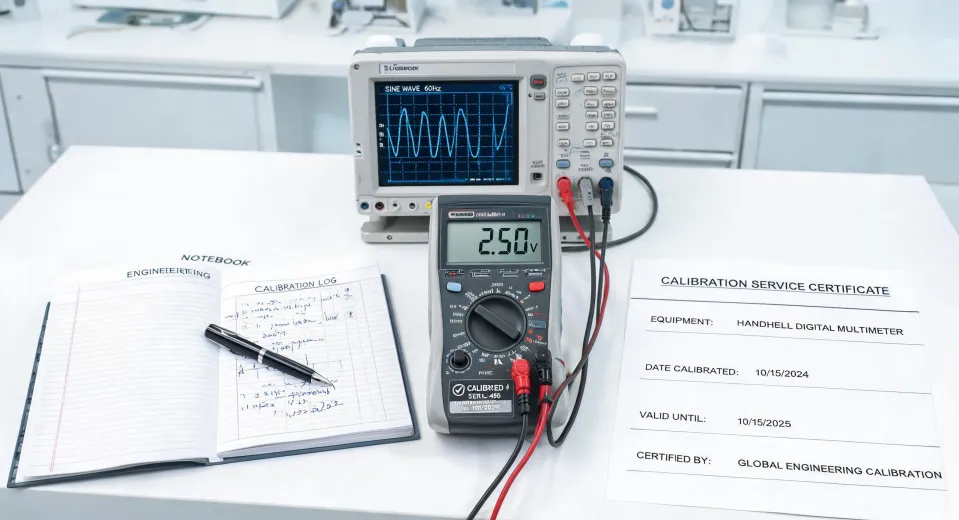
Oh, and don't forget: the 187 comes with a documented calibration certificate. That's not just paperwork—it's liability protection. If a client questions your measurement, you can point to traceable calibration.
Comparing Fluke Multimeters: A Quick Mental Model
Instead of a chart (which would be too neat for real life), here's how I think about the lineup:
- Fluke 115 – Sweet spot for 80% of field work. CAT III 600V, comes with a holster and leads. Reliable, simple. If you can only buy one, start here.
- Fluke 117 – Adds VoltAlert non-contact voltage detection and AutoV LoZ for ghost voltage detection. Worth it if you do residential/commercial troubleshooting.
- Fluke 87V – The legend. More rugged, more accuracy, better for industrial motor drives. Price around $500-550. For teams that work on VFDs and PLCs, it's worth the jump.
I've personally ordered all three models. The 115 is my go-to recommendation for new hires. The 87V goes to our senior techs who need to make judgement calls on-site. The 117 is for service vans where Voltage detection saves time.
Moisture Meters: Same Story, Different Tool
We recently added Fluke moisture meters to our kit. Same principle: an inaccurate moisture reading in a water damage restoration job can lead to secondary mold growth, which costs thousands. The Fluke 971 Temperature and Humidity Meter runs about $300. A no-name meter from Amazon was $45. Guess which one gave a reading 12% off in a 70% RH environment?
We paid $45 for that meter. Then we spent $200 on a professional calibration service to confirm it was bad. Then we bought the Fluke anyway. The 'savings' disappeared like moisture in a dry room.
How to Read a Sensus Digital Water Meter (And Why Tool Accuracy Matters)
Reading a Sensus digital water meter seems straightforward: look at the display. But the issue is under what conditions you're reading it. Some meters show cumulative flow in gallons, others in cubic feet, and some alternate between modes. The Sensus iPERL, for example, has a 9-digit register that scrolls.
If you're using a multimeter to measure the pulse output (for remote reading), you need a meter that can reliably count pulses without glitching. Cheap meters often miss pulses due to slow sampling rates. A Fluke 115 or 87V with a 10:1 probe can capture those pulses accurately. That's not a hypothetical—I've seen it happen.
The safer approach: use a Fluke 62 Max IR thermometer to check for temperature anomalies around the meter (which can indicate leaks), and a Fluke 115 to verify pulse output. The total cost? Under $500 for a setup that can prevent a $5,000 water damage claim.
When Not to Buy Fluke (The Honest Part)
I wouldn't be a good procurement manager if I didn't acknowledge the exceptions. Fluke is not always the right choice:
- Hobbyist or one-time use – If you're a homeowner fixing a light switch once, a $20 multimeter is fine.
- Non-critical monitoring – A cheap temperature logger for a warehouse? Save the money.
- Tools that get lost frequently – We have a 'sacrificial' tool policy for loaners. Those are not Fluke.
But for any scenario where a wrong reading means real money, real delays, or real safety risks, the deterministic value of Fluke's reliability is worth the premium. I've learned that the hard way, and I'd rather pay the premium upfront than explain a budget overrun to my CFO because we cheaped out on a tester.
Take this with a grain of salt—I'm one buyer with one company's experience. But after analyzing six years of procurement data, the math is clear: the certainty of Fluke is the most cost-effective choice for mission-critical testing.

Marcus Feld
Marcus Feld is an electrical test and measurement analyst specializing in multimeters, oscilloscopes, clamp meters, insulation testers, spectrum analyzers, and data loggers. He applies IEC 61010-2-030 and IEC 61010-031 concepts while examining measurement category, bandwidth, true-RMS response, input loading, and stated uncertainty. His work helps maintenance engineers and test teams choose safe instruments with performance suited to the signals and environments they actually measure.