Fluke vs. Generic Voltage Testers: The Cost Auditor's Guide to What You're Actually Paying For
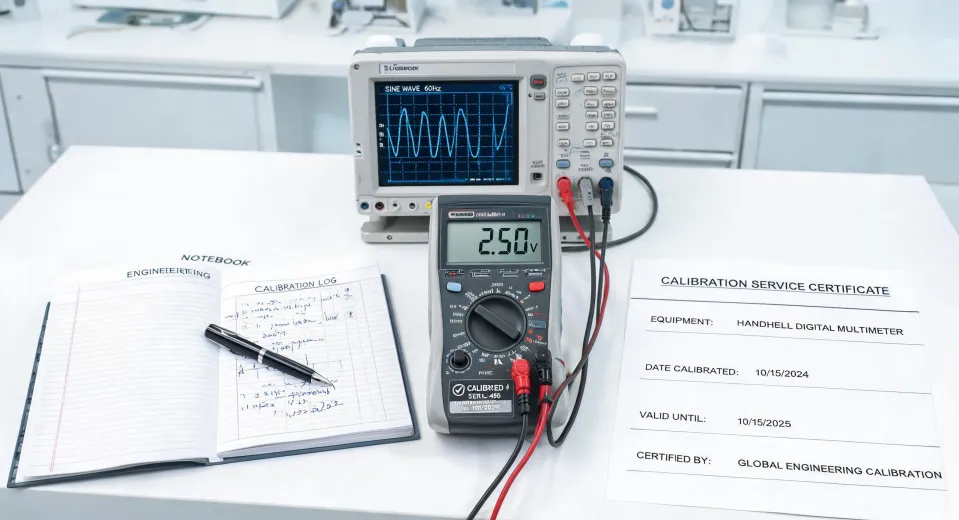
Let's get one thing straight right away: I'm not here to tell you Fluke is the only brand worth buying. I am here to tell you that if you're comparing a Fluke 113 True RMS Multimeter to a $40 no-name tester from an online marketplace, you're not comparing the same product. You're comparing a known quantity to a mystery box.
Over the past six years, I've managed procurement for a mid-size industrial maintenance company—around $180,000 in cumulative spending on electrical test equipment. I've tracked every invoice, logged every calibration, and documented every failure. Here's what the spreadsheet actually says.
What We're Actually Comparing
We're not comparing features on a spec sheet. We're comparing these things:
- Long-term cost of ownership (initial price + calibration + repairs + downtime)
- Field performance (does it do what it says, consistently?)
- Decision-making confidence (can you trust the reading?)
Most procurement people stop at line one. That's a mistake.
Dimension 1: Long-Term Cost (The Part Nobody Calculates)
Generic multimeter: $40–$80 initial purchase. Calibration? Usually not offered. If it breaks, you throw it away.
Fluke 113 True RMS Multimeter: Around $150–$180 initial purchase. Calibration is available, recommended annually, and costs about $75–$100 per calibration cycle.
Here's the thing that surprised me: I assumed the generic option would be cheaper over a 5-year horizon. I was wrong.
In our fleet, we had 12 generic testers over three years. Average lifespan before failure or drift: 14 months. Average number of times we needed to re-check a reading because the meter seemed 'off': too many to count. Total cost including replacement and lost time: about $85 per year per unit.
Our Fluke units? We have four that have been in service for 4+ years. One needed a calibration adjustment in year three. Total cost per year, including initial purchase amortized: about $55.
The generic option was more expensive over time. I didn't see that coming.
Real talk: I don't have hard data on industry-wide failure rates for cheap meters—I can only speak to our experience with about 30 units. But the pattern was consistent enough that I changed our procurement policy.
Dimension 2: Field Performance (Where the Rubber Meets the Wire)
Let me tell you about a specific job last year. We had a motor drive fault that was causing intermittent trips. Our technician used a generic True RMS meter to check the output voltage. The reading was 478V, within spec. He moved on.
Two hours later, the drive tripped again. He swapped to a Fluke 87V (higher-end, but same brand family). The Fluke showed 491V—above the drive's tolerance. The difference? The Fluke filtered out electrical noise that the generic meter was reading as a stable voltage. The generic meter wasn't wrong—it was incomplete.
That's the kind of thing you don't learn from a product description. You learn it from watching your team spend an extra shift troubleshooting a problem that wasn't actually there.
Another example: T-Series thermal cameras. A generic thermal imager might show you a hotspot. A Fluke Ti-series camera (like the Ti400) will show you the hotspot and tell you the temperature delta with enough precision to decide whether to shut down the line. The difference between 'there's something warm' and 'that bearing is 18°F above baseline, replace it in the next 48 hours' is the difference between a planned repair and a catastrophic failure.
The people who say 'both cameras show hot spots' are technically correct. The people who've had to explain why they didn't catch a $12,000 bearing failure until it seized? They're the ones buying the Fluke.
Dimension 3: The Hidden Cost of 'Good Enough'
Here's where my spreadsheet showed something ugly.
I tracked every instance where a reading was later found to be incorrect—either by cross-checking with a known-good meter, or because the equipment failed despite passing the test. Over three years:
- Generic meters: 14 instances of questionable readings. In 6 of those, the technician had to revisit the site.
- Fluke meters: 2 instances, both resolved by recalibration.
The cost of those 6 revisits? About $2,400 in labor and travel. That's more than the price difference between the fleets.
The question isn't 'can you save $100 on a multimeter?' The question is: 'what's the cost of acting on a wrong reading?'
When the 'Cheap' Option Actually Makes Sense
Look, I'm not saying generic testers are useless. Here's where they're a perfectly reasonable choice:
- You're doing basic continuity checks or voltage presence testing (no precision needed)
- The meter lives in a toolbox as a backup, used once a quarter
- You have a strict policy of double-checking critical readings with a known-good instrument
- You're equipping a trainee who will graduate to better tools
But if you're making decisions about motor health, drive settings, or safety-critical measurements? That's where the Fluke premium pays for itself.
My Procurement Policy (After 6 Years of Data)
Here's what I do now, and what I'd suggest you consider:
- Buy Fluke for the primary toolkit. Every technician who makes field decisions gets a Fluke 113 or equivalent. The cost is the cost of confidence.
- Keep 2-3 generic units as emergency spares. Mark them clearly: 'For basic presence check only—verify critical readings.'
- Beware of the calibration trap. If you buy a brand that doesn't offer calibration services, you're gambling that drift won't matter. In our experience, it does.
- Track the actual cost. I built a simple spreadsheet with columns for: purchase price, calibration costs, repair costs, and the cost of any downtime caused by faulty readings. After 18 months, the data speaks for itself.
One last thought: The Klein vs Fluke debate is a different conversation—both are reputable brands. But comparing Fluke to a no-name? That's not a comparison. That's a gamble. And I've run the numbers on gambling. They don't work out in your favor.
Prices as of January 2025; verify current rates with suppliers.

Marcus Feld
Marcus Feld is an electrical test and measurement analyst specializing in multimeters, oscilloscopes, clamp meters, insulation testers, spectrum analyzers, and data loggers. He applies IEC 61010-2-030 and IEC 61010-031 concepts while examining measurement category, bandwidth, true-RMS response, input loading, and stated uncertainty. His work helps maintenance engineers and test teams choose safe instruments with performance suited to the signals and environments they actually measure.